
Trade Unions in India: What Factory HR Teams Must Know
INDUSTRIAL RELATIONS & FACTORY HR
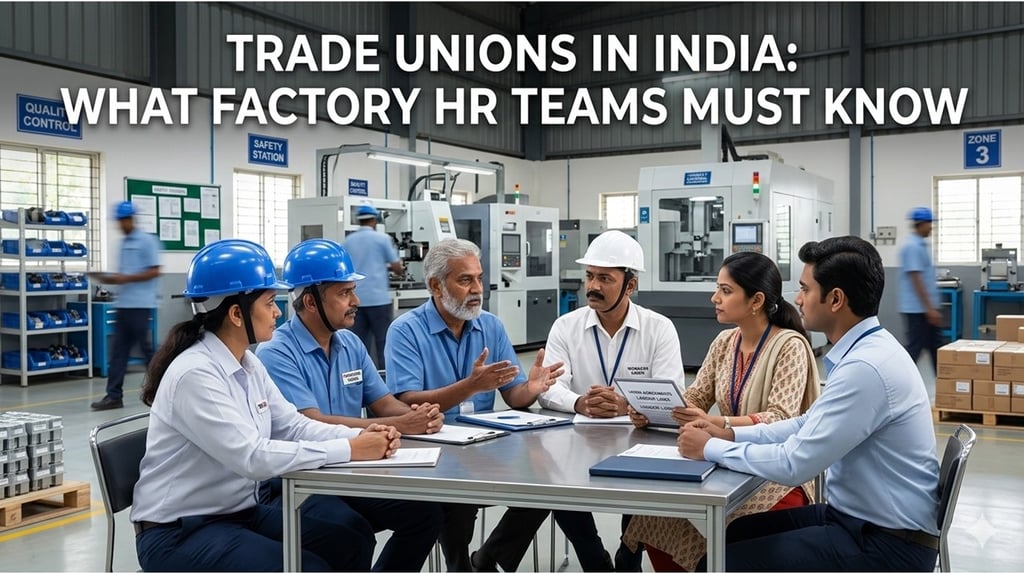
Trade unions remain a key feature of Indian factories and industrial establishments. They are not just collective bargaining agents but also stakeholders in maintaining workplace harmony, compliance, and productivity.
For factory HR teams, understanding trade unions is critical. Mismanagement or poor engagement can lead to disputes, strikes, and operational disruptions. Conversely, proactive, informed engagement can foster trust, streamline communication, and ensure lawful, smooth operations.
This article provides a practical guide for HR teams on trade unions in India, including structure, legal framework, responsibilities, challenges, and strategies for effective engagement.
What Trade Unions Are and Why They Exist
Trade unions are organisations formed by workers to protect rights, negotiate wages, and safeguard working conditions.
They provide a collective voice to employees, especially in sectors with high labour intensity or hazardous operations.
In factories, trade unions often work closely with management for bipartite negotiations, grievance resolution, and implementation of welfare schemes.
Key Functions of Trade Unions
Collective Bargaining: Negotiating wages, allowances, benefits, and working conditions.
Grievance Representation: Acting as a channel for employee complaints and dispute resolution.
Worker Welfare Initiatives: Overseeing safety measures, medical support, and recreational facilities.
Industrial Harmony: Mediating between workers and management to prevent conflicts or strikes.
Legal Framework Governing Trade Unions in India
Factory HR must operate within India’s legal provisions to avoid disputes:
Trade Unions Act, 1926: Governs registration, rights, and responsibilities of unions.
Industrial Relations Code, 2020: Consolidates multiple IR laws; regulates dispute resolution, strikes, layoffs, and union recognition.
Factories Act, 1948: Requires consultation with safety committees and adherence to welfare provisions.
Contract Labour (R&A) Act, 1970: Ensures compliance when unionised contract workers are employed.
Key Points for HR Compliance
Only registered unions are recognised for formal negotiations.
Union elections and recognition procedures must comply with the Trade Unions Act and IR Code.
HR must document all communications, agreements, and settlements with unions.
Management must avoid unfair practices such as discrimination, victimisation, or interference in union activities.
Types of Trade Unions in Factories
Recognised Unions: Formally registered and acknowledged by management; participate in collective bargaining.
Non-Recognised Unions: May exist but have no legal bargaining power; HR should monitor activities for workplace impact.
Independent or Political Unions: Often affiliated to political parties; may influence negotiation dynamics and industrial action.
Common Challenges Factory HR Faces
Union Fragmentation: Multiple unions in the same factory may create conflicting demands.
Political Influence: Some unions have political alignments, affecting negotiations.
Contract & Gig Workforce Representation: Temporary employees may not be unionised, complicating compliance and engagement.
Dispute Escalation: Unresolved grievances may quickly lead to strikes or production disruptions.
Legal Non-Compliance: Mishandling union recognition, elections, or agreements can lead to penalties or litigation.
HR Responsibilities in Managing Trade Unions
Union Mapping: Maintain a clear understanding of union structure, leaders, and membership.
Communication Channels: Establish formal channels for negotiation, grievances, and routine updates.
Documentation: Record all meetings, agreements, and settlements for legal and operational clarity.
Grievance Handling: Collaborate with union representatives to resolve disputes promptly.
Policy Awareness: Ensure supervisors and line managers understand Standing Orders and policies.
Training: Educate HR and operational teams on IR laws, conflict resolution, and union dynamics.
Strategic Approaches for Effective Union Management
Proactive Engagement: Meet union leaders regularly to address concerns before escalation.
Transparency: Share policy changes, wage revisions, and operational updates openly.
Participative Initiatives: Include union input in safety, welfare, and skill development programs.
Data-Driven Decisions: Use attendance, grievance, and productivity data to anticipate issues.
Conflict Prevention: Establish grievance redressal mechanisms, feedback loops, and early warning systems.
Conclusion
Trade unions are a permanent and influential feature of Indian factories. For HR teams, understanding legal provisions, union structures, and operational dynamics is essential for maintaining harmony, compliance, and productivity.
A proactive, transparent, and participative approach to trade union management allows HR to minimise disputes, foster collaboration, and support strategic workforce outcomes.
🗹 Trade Union Management – HR Action Checklist
🗹 Maintain updated records of registered and active trade unions
🗹 Map union leadership, membership, and influence levels
🗹 Establish clear and regular communication channels with unions
🗹 Document all meetings, agreements, and dispute resolutions
🗹 Monitor compliance with Trade Unions Act and IR Code 2020
🗹 Engage proactively to prevent escalation of grievances
🗹 Train supervisors and line managers in union-related policies and conflict management
🗹 Include unions in welfare, safety, and participative management initiatives
🗹 Use analytics to track disputes, attendance, and workforce trends
Trade Union Elements & HR Responsibilities (Sample Table)
Conclusion--
Effective labour law compliance depends on how well HR operations, payroll, and business processes work together. When compliance is embedded into everyday workflows, organisations reduce risk, improve accuracy, and build sustainable governance systems. HR teams that prioritise integration over isolation are better positioned to manage compliance confidently and consistently.
HireDesk India © 2026 | All Rights Reserved
"Thoughtful guidance for everyday HR"


Quick Links
Topics
Connect
_______________________________________________________________________________________________________________________________________________________________________________________
HireDesk is a free HR knowledge platform focused on practical, India-specific workplace guidance. We help HR professionals, managers, and learners navigate people practices with clarity, responsibility, and real-world relevance.