
Traditional vs Continuous Performance Management Models
PERFORMANCE & DEVELOPMENT
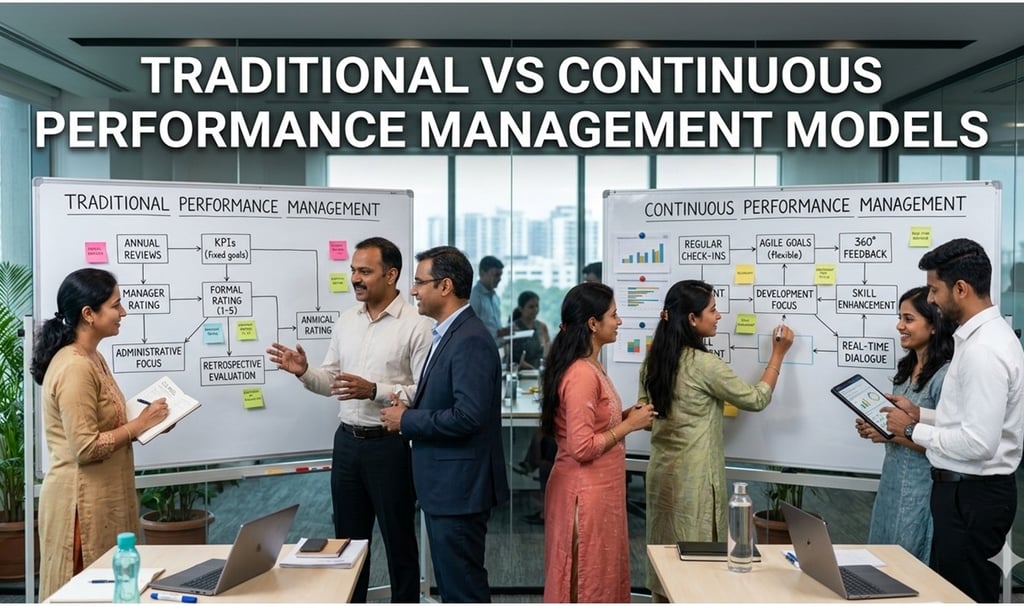
Performance management practices in organisations have evolved over time. Traditionally, performance management focused on annual appraisals, ratings, and evaluation of past performance. Modern practices, however, emphasise continuous performance management, where feedback, coaching, and goal tracking occur throughout the year.
Understanding the differences helps HR professionals select and implement the approach best suited for their organisation’s culture and business needs.
Traditional Performance Management
Key Features:
Annual performance reviews with a formal rating system
Feedback delivered once or twice a year
Goal setting at the start of the year
Focus primarily on evaluating past performance
Limited coaching or development integration
Advantages:
Simple and structured
Easy to administer in large organisations
Limitations:
Delayed feedback can reduce effectiveness
Limited employee engagement
Potential for rating bias and disputes
Continuous Performance Management
Key Features:
Frequent check-ins, monthly or quarterly reviews
Real-time feedback and coaching
Dynamic goal setting, adaptable to changing business priorities
Focus on both performance outcomes and employee development
Advantages:
Timely recognition and correction
Higher employee engagement
Integration with development and career planning
Limitations:
Requires manager capability and training
More administrative attention to track conversations and progress
Light Checklist: Choosing the Right Approach
☐ Organisation size and structure considered
☐ HR and managers trained for the chosen model
☐ Feedback culture is supported
☐ Goals are adaptable and regularly reviewed
☐ Development and coaching integrated
☐ Monitoring and governance mechanisms in place
Sample HTML Table: Comparing Traditional vs Continuous Performance Management
Closing Note
Choosing between traditional and continuous performance management depends on organisational needs, culture, and capability. Many Indian organisations are gradually shifting to continuous models to enhance engagement, development, and productivity while retaining structured review elements.
Conclusion--
Effective labour law compliance depends on how well HR operations, payroll, and business processes work together. When compliance is embedded into everyday workflows, organisations reduce risk, improve accuracy, and build sustainable governance systems. HR teams that prioritise integration over isolation are better positioned to manage compliance confidently and consistently.
HireDesk India © 2026 | All Rights Reserved
"Thoughtful guidance for everyday HR"


Quick Links
Topics
Connect
_______________________________________________________________________________________________________________________________________________________________________________________
HireDesk is a free HR knowledge platform focused on practical, India-specific workplace guidance. We help HR professionals, managers, and learners navigate people practices with clarity, responsibility, and real-world relevance.