
Training and Development on a Budget: SME-Friendly HR Ideas
SME HR OPERATIONS
Introduction--
Once a candidate accepts an offer, the period between acceptance and joining becomes a critical phase in the recruitment lifecycle. This pre-joining window influences whether a candidate actually joins, how prepared they feel on Day One, and how quickly they settle into the organisation. For HR, effective pre-joining engagement and onboarding planning are essential to convert offers into confident, committed employees.
This article outlines practical approaches HR teams can adopt to manage pre-joining engagement and establish strong onboarding foundations—without overcomplicating the process.
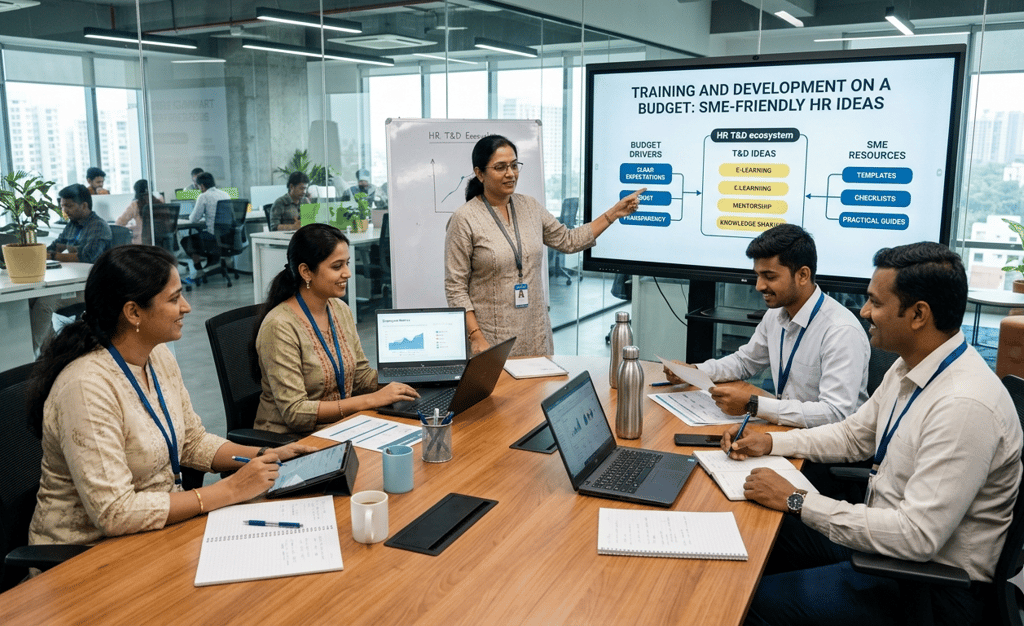
Training and development in Indian SMEs often gets postponed due to cost concerns, time pressure, and lack of structured programmes. Many SME leaders believe training requires external trainers, classrooms, and significant budgets.
In reality, effective training in SMEs is more about intent, structure, and consistency than money. When aligned closely to business needs, even low-cost training efforts can significantly improve productivity, retention, and capability.
This article outlines practical, budget-friendly training approaches that work in SME environments.
Why SMEs Struggle With Training
Common challenges include:
Limited training budgets
No dedicated L&D teams
Operational workload leaving little time
Difficulty measuring ROI
High attrition fear after training
HR’s role is to design lean, relevant, and repeatable training practices.
Focus on Need-Based Training, Not Catalogues
SMEs should avoid generic training calendars. Instead, HR should:
Identify skill gaps linked to business outcomes
Prioritise mandatory and operational skills
Train only what is immediately useful
Avoid “nice-to-have” programmes
This ensures training effort directly supports productivity.
Low-Cost Training Methods That Work in SMEs
Effective budget-friendly methods include:
On-the-job training by supervisors
Buddy or shadowing systems
Short internal knowledge sessions
Cross-functional exposure
Use of free or low-cost digital content
Consistency matters more than format.
Role of Managers and Supervisors
In SMEs, managers are the most important trainers.
HR should:
Equip managers to coach and demonstrate
Set expectations for training ownership
Track participation and basic outcomes
Recognise managers who develop teams
Training cannot succeed if left to HR alone.
Training Documentation and Compliance
Even informal training needs basic records.
HR should maintain:
Training attendance records
Safety and statutory training logs
Skill certification where applicable
This supports compliance and internal accountability.
Measuring Training Effectiveness Simply
SMEs do not need complex metrics. Simple indicators include:
Improved task accuracy
Reduced rework or errors
Supervisor feedback
Employee confidence and engagement
Practical observation is often enough.
Conclusion
Training and development in SMEs does not require large budgets — it requires clarity, focus, and discipline. When HR aligns training closely with operational needs and leverages internal expertise, SMEs can build capability without over-investment.
Sustainable training is simple, continuous, and business-driven.
Checklist: Budget-Friendly Training Practices for SMEs
🗹 Identify training needs linked to business outcomes
🗹 Prioritise operational and mandatory skills
🗹 Use on-the-job and buddy-based training
🗹 Involve managers as primary trainers
🗹 Leverage free or low-cost learning resources
🗹 Maintain basic training records
🗹 Review effectiveness through observation
🗹 Avoid over-designing training programmes
Cost-Effective Training Options for SMEs
Conclusion--
Effective labour law compliance depends on how well HR operations, payroll, and business processes work together. When compliance is embedded into everyday workflows, organisations reduce risk, improve accuracy, and build sustainable governance systems. HR teams that prioritise integration over isolation are better positioned to manage compliance confidently and consistently.
HireDesk India © 2026 | All Rights Reserved
"Thoughtful guidance for everyday HR"


Quick Links
Topics
Connect
_______________________________________________________________________________________________________________________________________________________________________________________
HireDesk is a free HR knowledge platform focused on practical, India-specific workplace guidance. We help HR professionals, managers, and learners navigate people practices with clarity, responsibility, and real-world relevance.