
Training, Learning, and Skill Development in Factories: HR Practical Guide
INDUSTRIAL RELATIONS & FACTORY HR
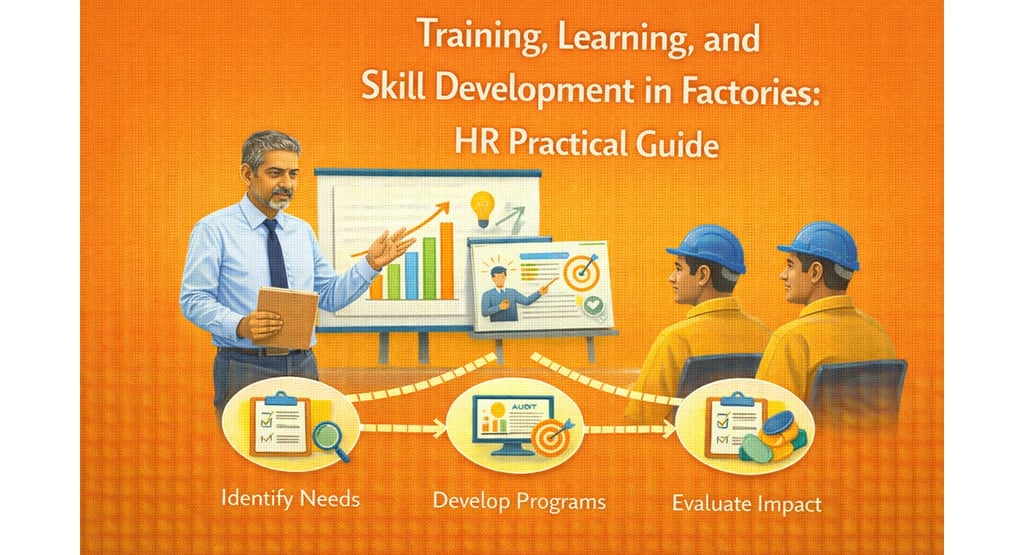
Training and skill development are essential for factory operations in India. With evolving machinery, safety standards, and production methods, factories cannot rely only on experience or informal learning.
Factory HR teams play a key role in identifying skill gaps, ensuring statutory training compliance, and building a capable, future-ready workforce. Effective training improves productivity, reduces accidents, and strengthens industrial relations.
Why Training Is Critical in Factories
Ensures safe operation of machines and processes
Improves quality and productivity
Reduces accidents, errors, and rework
Supports career growth and retention
Helps meet statutory training requirements
Untrained or under-trained workers pose both operational and legal risks.
Types of Training in Factory Environments
Induction Training
Safety rules, standing orders, code of conduct
Basic process and workplace orientation
Job-Specific and Technical Training
Machine handling, SOPs, quality standards
Process upgrades and technology changes
Safety and Compliance Training
PPE usage, emergency procedures
Fire safety, hazardous material handling
Skill Upgradation and Multi-Skilling
Cross-training across machines or functions
Supports flexibility and succession planning
Supervisory and Behavioural Training
Leadership, communication, discipline handling
Industrial relations awareness
HR Responsibilities in Training Management
Factory HR must:
Identify training needs through audits and performance reviews
Prepare annual training calendars
Coordinate with internal trainers or external institutes
Maintain training records and certifications
Ensure statutory and safety training compliance
Evaluate training effectiveness
Training should be planned, documented, and measurable.
Training Records and Compliance
Proper documentation is essential for:
Labour inspections and audits
Accident investigations
Skill certification and promotions
Legal defence during disputes
Records should include attendance, content, trainer details, and assessments.
Common Training Challenges
Production pressure limiting training time
Low literacy or language barriers
Inconsistent supervisor support
Poor tracking of training outcomes
Resistance to change from experienced workers
HR must design practical, shop-floor-friendly training methods.
Conclusion
Training and skill development are not optional in factories. They are critical enablers of safety, productivity, compliance, and workforce stability.
A structured HR-led training approach ensures that workers remain competent, confident, and aligned with organisational goals while reducing operational and legal risks.
🗹 Factory HR Checklist: Training & Skill Development
🗹 Identify skill gaps through audits and performance reviews
🗹 Prepare and follow an annual training calendar
🗹 Conduct induction and safety training for all employees
🗹 Provide job-specific and technical training
🗹 Promote multi-skilling and cross-training
🗹 Maintain detailed training records and certifications
🗹 Evaluate training effectiveness periodically
🗹 Align training with safety, compliance, and IR needs
Training & Skill Development – Key HR Responsibility Matrix
Conclusion--
Effective labour law compliance depends on how well HR operations, payroll, and business processes work together. When compliance is embedded into everyday workflows, organisations reduce risk, improve accuracy, and build sustainable governance systems. HR teams that prioritise integration over isolation are better positioned to manage compliance confidently and consistently.
HireDesk India © 2026 | All Rights Reserved
"Thoughtful guidance for everyday HR"


Quick Links
Topics
Connect
_______________________________________________________________________________________________________________________________________________________________________________________
HireDesk is a free HR knowledge platform focused on practical, India-specific workplace guidance. We help HR professionals, managers, and learners navigate people practices with clarity, responsibility, and real-world relevance.