
Understanding Industrial Relations in Indian Factories
INDUSTRIAL RELATIONS & FACTORY HR
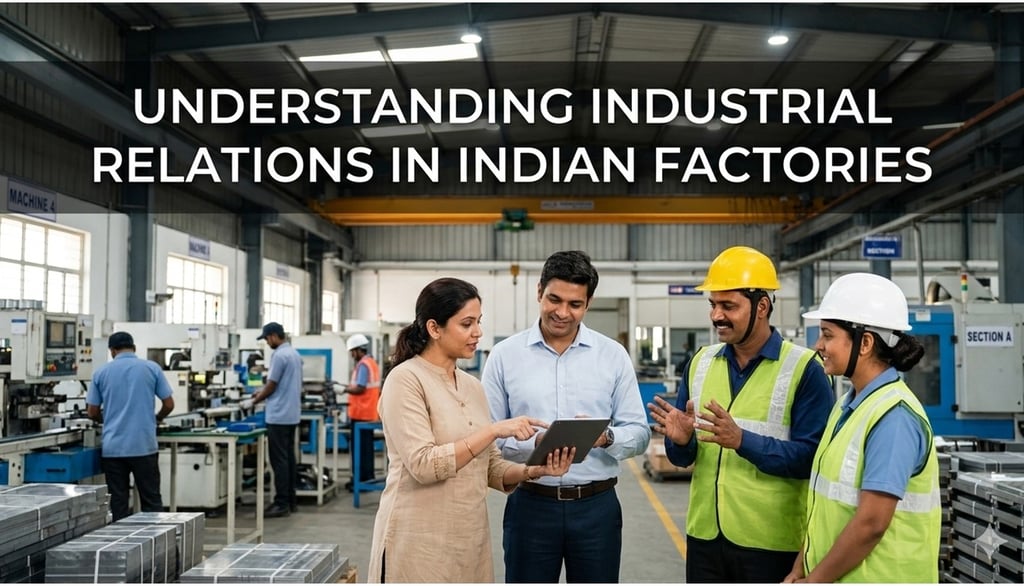
Industrial Relations (IR) in Indian factories is about more than handling disputes — it is the backbone of stable factory operations. Manufacturing units, warehouses, and large plants employ a mix of permanent, contract, and seasonal workers, often under union influence.
For HR, understanding IR means being aware of legal requirements, union dynamics, workforce expectations, and operational pressures. Poor IR management can cause production loss, strikes, or legal action, while proactive IR ensures smooth operations, predictable workforce behaviour, and strong compliance.
This article explains what IR entails in Indian factories and what HR leaders need to know to manage it effectively.
What Industrial Relations Covers in Factories
Industrial Relations refers to the relationship and interaction between:
Management
Employees (permanent and contract)
Trade unions or worker committees
Government authorities
Key IR elements include:
Union activity and collective bargaining
Worker grievances and dispute resolution
Disciplinary processes and enforcement
Compliance with labour laws and factory regulations
Liaison with labour authorities and inspectors
Trade Unions in Indian Factories
Trade unions remain a major feature of Indian industrial workplaces, especially in manufacturing, textiles, metal, chemicals, and logistics sectors. HR must understand:
Whether a union is recognised or informal
The membership strength and influence of union leaders
The process of collective bargaining
The importance of documenting settlements and agreements
Even factories without formal unions may have informal worker groups, and ignoring them can result in unplanned disruptions.
Common Industrial Relations Challenges
Factory HR professionals typically encounter the following challenges:
Sudden strikes or work stoppages
Grievances over wages, shifts, or safety conditions
Misinterpretation or non-compliance of standing orders
Pressure from labour inspectors
Contract labour disputes
Recognising these issues early allows HR to act proactively rather than reactively.
Legal Framework Impacting IR
HR in factories must operate within India’s labour laws, which define employee rights and management responsibilities:
Factories Act, 1948: Health, safety, and welfare provisions
Industrial Disputes Act, 1947: Dispute resolution, strikes, layoffs
Contract Labour (R&A) Act: Compliance for contractors and outsourced workers
Minimum Wages and Payment of Wages Acts: Proper remuneration
ESI and PF regulations: Statutory benefits
Being conversant with these laws ensures HR can prevent disputes, conduct lawful disciplinary action, and handle inspections effectively.
HR’s Role in Managing Industrial Relations
HR leaders are the first line of IR management in factories. Responsibilities include:
Understanding union structures and worker expectations
Communicating rules, policies, and Standing Orders clearly
Handling grievances promptly and fairly
Advising management on legal compliance and operational risks
Maintaining records for audits and inspections
Preparing supervisors and line managers for shop-floor IR challenges
Strong HR involvement prevents escalation and creates predictable, stable factory operations.
Conclusion
Understanding Industrial Relations is essential for HR leaders in Indian factories. It combines legal knowledge, worker engagement, and proactive management.
HR that anticipates disputes, maintains clear communication, and ensures lawful practices can prevent strikes, avoid legal penalties, and maintain continuous production and workforce trust.
🗹 Industrial Relations – HR Action Checklist
🗹 Identify and understand union presence and worker committees
🗹 Keep updated records of union recognition and agreements
🗹 Monitor worker grievances and respond promptly
🗹 Communicate Standing Orders and policies clearly to all staff
🗹 Train supervisors on IR basics and dispute handling
🗹 Ensure legal compliance with labour laws and regulations
🗹 Maintain documentation for all IR interactions
🗹 Liaise proactively with labour authorities when required
Industrial Relations Components in Indian Factories (Reference Table)
Conclusion--
Effective labour law compliance depends on how well HR operations, payroll, and business processes work together. When compliance is embedded into everyday workflows, organisations reduce risk, improve accuracy, and build sustainable governance systems. HR teams that prioritise integration over isolation are better positioned to manage compliance confidently and consistently.
HireDesk India © 2026 | All Rights Reserved
"Thoughtful guidance for everyday HR"


Quick Links
Topics
Connect
_______________________________________________________________________________________________________________________________________________________________________________________
HireDesk is a free HR knowledge platform focused on practical, India-specific workplace guidance. We help HR professionals, managers, and learners navigate people practices with clarity, responsibility, and real-world relevance.