
Understanding Labour Law Compliance for Indian Employers
COMPLIANCE & LABOUR LAWS
Introduction
Labour law compliance is a critical responsibility for HR teams in Indian companies. Organisations are expected to comply with various employment-related laws governing wages, working conditions, social security, employee welfare, industrial relations, workplace safety, statutory documentation, and employment practices.
For employers, labour law compliance is not limited to avoiding penalties or inspections alone. Effective compliance systems also support workforce stability, operational continuity, organisational credibility, and fair workplace practices.
In India, compliance responsibilities may vary depending on factors such as:
industry
organisation size
state-specific regulations
workforce structure
nature of operations
use of contract labour
factory or commercial establishment status
At the same time, labour law compliance can become operationally challenging due to changing regulations, multiple statutory requirements, documentation expectations, inspection processes, and coordination across departments and vendors.
This article provides a practical overview of labour law compliance in the Indian context — covering employer responsibilities, statutory frameworks, operational compliance practices, workforce-related obligations, common compliance risks, and the role of HR in supporting compliant workplaces.
The objective is not to provide legal interpretation or professional legal advice, but to help employers and HR teams better understand the practical importance of labour law compliance and the systems required to manage it responsibly.

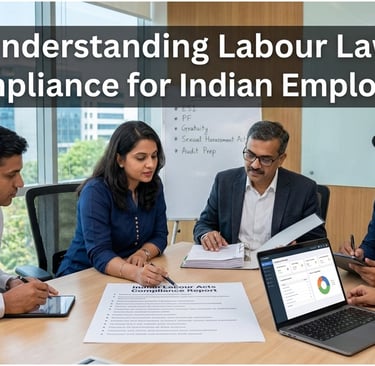
Understanding Labour Law Compliance
Labour law compliance refers to the process through which employers meet their legal obligations relating to:
employment practices
employee welfare
wages and benefits
working conditions
social security
workplace safety
statutory records
industrial relations
employee rights
Compliance responsibilities may arise under:
central labour laws
state-specific labour laws
industry regulations
factory and establishment laws
social security frameworks
employment-related rules and notifications
Compliance is not a one-time activity. It requires ongoing monitoring, documentation, implementation, and coordination across organisational functions.
__________________________________________________________________________________________________
Why Labour Law Compliance Matters
Effective labour law compliance supports:
legal risk reduction
smoother business operations
workforce trust
industrial harmony
organisational credibility
responsible employment practices
better audit readiness
improved governance standards
Poor compliance management may expose organisations to:
penalties
legal disputes
inspection-related issues
operational disruptions
employee grievances
reputational concerns
contractor-related liabilities
regulatory scrutiny
In labour-intensive industries, compliance failures may significantly affect operational continuity and workforce relations.
Major Areas of Labour Law Compliance in India
Indian employers may need to manage multiple compliance areas depending on organisational applicability.
1. Wage and Salary Compliance
Employers are generally required to comply with rules relating to:
minimum wages
wage payment timelines
overtime payments
wage deductions
salary records
bonus eligibility
equal remuneration principles
Wage-related compliance is closely connected to employee trust and workforce stability.
2. Social Security Compliance
Organisations may need to manage statutory obligations relating to:
provident fund contributions
employee state insurance
gratuity eligibility
maternity benefits
employee compensation
pension-related obligations
Social security compliance often involves:
employee registration
monthly contributions
documentation management
periodic returns
statutory coordination
3. Working Hours, Leave and Attendance
Employers may need to comply with rules relating to:
working hours
shift scheduling
weekly offs
overtime limits
leave eligibility
attendance tracking
holiday requirements
Factories, shops, establishments, and commercial offices may have different compliance obligations depending on applicable laws.
4. Factory and Workplace Safety Compliance
Industrial and manufacturing establishments may additionally require compliance relating to:
workplace safety
hazardous operations
employee welfare facilities
machine safety
health and sanitation requirements
accident reporting
safety committees
canteen and welfare provisions
Workplace safety compliance is particularly important in factories, warehouses, construction environments, and operational facilities.
5. Contract Labour Compliance
Organisations engaging contractors or third-party manpower may need to manage compliance relating to:
contractor registration and licensing
wage monitoring
statutory contribution verification
attendance tracking
contractor documentation
principal employer responsibilities
Contract labour compliance becomes especially important in manufacturing, logistics, security, housekeeping, and project-based environments.
6. Employment Documentation and Records
Employers are often required to maintain:
employee records
wage registers
attendance records
statutory notices
appointment documents
compliance registers
inspection records
contractor documentation
Accurate documentation plays an important role during inspections, audits, disputes, and statutory verification processes.
7. Industrial Relations and Employee Rights
Labour compliance also includes obligations connected to:
disciplinary processes
employee grievances
domestic enquiries
standing orders
industrial disputes
union interactions
workforce communication
Industrial relations compliance is especially important in factories and unionised environments.
__________________________________________________________________________________________________
Labour Law Compliance in Indian Organisations
Compliance obligations in India may differ significantly depending on:
state-specific applicability
workforce size
operational category
factory or office setup
industry sector
contract labour usage
shift operations
business expansion activities
For example:
factories may face extensive operational and safety-related compliance obligations
IT and service organisations may focus more on employment policies and workplace practices
retail and commercial establishments may require state-specific Shops and Establishments compliance
logistics and project-based operations may involve higher contractor compliance dependency
There is no single compliance model suitable for every organisation.
However, structured compliance systems help organisations reduce operational and legal risks more effectively.
__________________________________________________________________________________________________
Common Labour Law Compliance Challenges
Many organisations face recurring compliance challenges such as:
changing regulatory requirements
poor documentation management
delayed statutory filings
contractor non-compliance
inconsistent attendance and wage records
lack of compliance ownership
inspection preparedness issues
poor interdepartmental coordination
low awareness among managers and supervisors
Smaller organisations may additionally face:
limited compliance expertise
dependency on external consultants
fragmented HR systems
resource constraints
Practical compliance systems help organisations manage these challenges more consistently.
__________________________________________________________________________________________________
The Role of HR in Labour Law Compliance
HR often plays an important coordinating role in labour compliance through:
employee documentation
policy implementation
statutory coordination
attendance and leave management
contractor compliance monitoring
employee communication
grievance handling
disciplinary process support
workforce record management
However, labour law compliance cannot be managed by HR alone.
Effective compliance management usually requires coordination across:
management
HR
finance and payroll
operations
legal teams
contractors and vendors
plant administration
safety departments
Compliance becomes more sustainable when organisations create shared accountability rather than treating compliance as an isolated HR responsibility.
__________________________________________________________________________________________________
Building Sustainable Compliance Systems
Organisations benefit from:
structured documentation systems
periodic compliance reviews
clear compliance ownership
contractor verification mechanisms
payroll accuracy
attendance discipline
audit preparedness
manager awareness
compliance calendars
updated policy frameworks
Well-organised compliance systems improve operational consistency while reducing avoidable legal and administrative risks.
__________________________________________________________________________________________________
Labour Compliance Requires Continuous Attention
Labour law compliance is not a one-time documentation exercise. Compliance obligations evolve continuously based on:
regulatory updates
workforce changes
business expansion
operational complexity
inspection expectations
changing employment practices
In Indian workplaces, compliance management becomes more effective when organisations remain:
proactive
organised
documentation-focused
operationally disciplined
legally aware
responsive to regulatory changes
Responsible compliance practices help organisations strengthen workforce trust, operational stability, and long-term organisational credibility.
__________________________________________________________________________________________________
Explore Related Topics and Guides
Several related articles within the Labour Law Compliance section explore wages and salary compliance, statutory benefits, social security obligations, contract labour management, factory compliance, workplace safety, attendance and leave regulations, disciplinary procedures, industrial relations, and employer responsibilities through more specific workplace situations and practical HR perspectives.
Together, these resources aim to help employers and HR teams build compliance systems that are structured, responsible, operationally practical, and aligned with Indian labour law requirements.
__________________________________________________________________________________________________
Conclusion
Labour law compliance is an essential part of responsible employment and organisational governance in India. Effective compliance systems help organisations manage legal obligations, support workforce welfare, strengthen operational continuity, and reduce avoidable regulatory and industrial risks.
In Indian workplaces, compliance management involves much more than statutory filings alone. It requires consistent documentation, workforce coordination, operational discipline, contractor oversight, policy implementation, and continuous monitoring across multiple areas of employment practice.
There is no single compliance structure suitable for every organisation or industry. However, organisations generally manage compliance more effectively when systems remain:
practical
organised
documentation-focused
operationally aligned
regularly reviewed
responsive to regulatory requirements
As organisations continue to evolve, labour law compliance should increasingly be viewed not merely as a statutory obligation, but as an important part of building responsible, stable, and professionally managed workplaces.
Related Articles
HireDesk India © 2026 | All Rights Reserved
"Thoughtful guidance for everyday HR"


Quick Links
Topics
Connect
_______________________________________________________________________________________________________________________________________________________________________________________
HireDesk is a free HR knowledge platform focused on practical, India-specific workplace guidance. We help HR professionals, managers, and learners navigate people practices with clarity, responsibility, and real-world relevance.