
Understanding Payslip Components: What HR Must Explain to Employees
A payslip is more than a salary statement—it is a statutory record and a key communication tool between HR, payroll, and employees. When employees do not understand their payslips, it often leads to confusion, mistrust, and repeated payroll queries.
PAYROLL, PF & BENEFITS
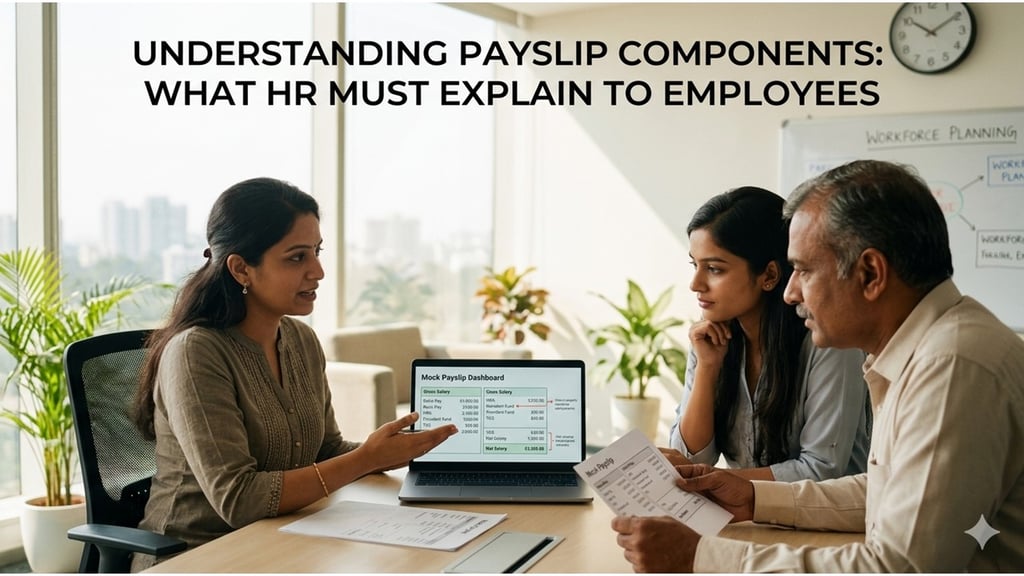
A payslip is more than a salary statement—it is a statutory record and a key communication tool between HR, payroll, and employees. When employees do not understand their payslips, it often leads to confusion, mistrust, and repeated payroll queries.
This article helps HR professionals understand payslip components clearly and explains what employees should know about their monthly salary structure.
Why Payslip Clarity Matters
Clear payslip communication helps:
Reduce payroll-related queries
Build employee trust
Ensure statutory transparency
Support financial literacy among employees
HR plays a central role in interpreting payroll data into understandable terms.
Core Sections of a Payslip
1. Earnings
Typical earning components include:
Basic salary
House Rent Allowance (HRA)
Special allowance
Conveyance or other allowances
Performance incentives (if applicable)
Only certain components are considered for statutory calculations.
2. Deductions
Common deductions shown on payslips:
Provident Fund (PF)
Employee State Insurance (ESIC)
Professional Tax
Income Tax (TDS)
Loan or advance recoveries
Each deduction should align with statutory rules and payroll policies.
3. Net Pay
Net pay represents:
Total Earnings – Total Deductions
This is the final amount credited to the employee’s bank account.
Statutory Details HR Should Highlight
PF and ESIC contribution split (employee vs employer)
Universal Account Number (UAN) reference
ESIC insurance number
Month and wage period covered
Payslip issue date
Payslips should be issued monthly and retained as payroll records.
Common Employee Questions HR Must Be Ready For
Why has my PF amount changed?
Why is TDS deducted even when my salary is low?
What is the difference between CTC and take-home pay?
Why does net pay vary month to month?
Prepared explanations reduce friction and repeated follow-ups.
Payslip Explanation Checklist for HR
☐ Ensure consistent component naming
☐ Highlight statutory deductions clearly
☐ Share sample payslip during onboarding
☐ Provide FAQs or quick guides
☐ Address changes proactively
Conclusion
When HR proactively explains payslip components, payroll becomes transparent rather than transactional. A clear payslip builds confidence, reduces disputes, and supports healthy employer–employee relationships.
Conclusion--
Effective labour law compliance depends on how well HR operations, payroll, and business processes work together. When compliance is embedded into everyday workflows, organisations reduce risk, improve accuracy, and build sustainable governance systems. HR teams that prioritise integration over isolation are better positioned to manage compliance confidently and consistently.
Related Articles
HireDesk India © 2026 | All Rights Reserved
"Thoughtful guidance for everyday HR"


Quick Links
Topics
Connect
_______________________________________________________________________________________________________________________________________________________________________________________
HireDesk is a free HR knowledge platform focused on practical, India-specific workplace guidance. We help HR professionals, managers, and learners navigate people practices with clarity, responsibility, and real-world relevance.