
Understanding the Indian Labour Law Framework: What HR Must Know
COMPLIANCE & LABOUR LAWS
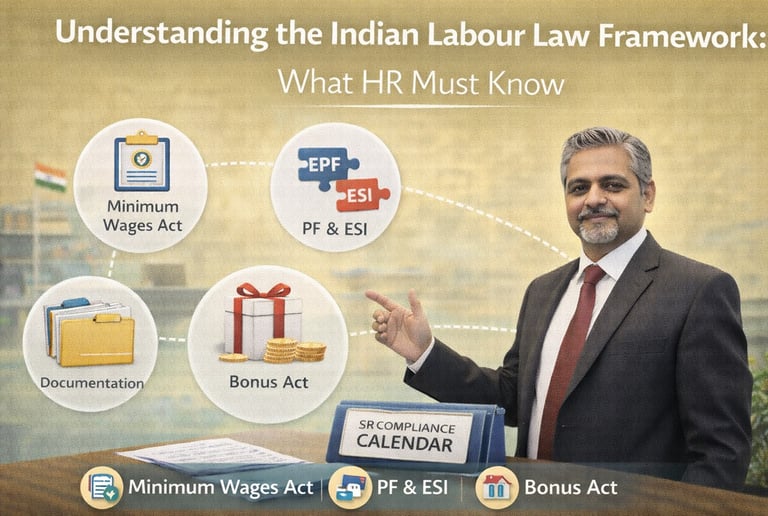
India’s labour law environment is unique and complex. With over 40 central laws and multiple state-specific regulations, HR teams must navigate overlapping provisions, frequent amendments, and practical challenges in enforcement.
For HR practitioners, understanding this framework is not about memorising every section — it is about knowing which laws apply, how to prioritise compliance, and how to operationalise HR processes in a legally defensible way.
This article provides a practical, India-focused view of the labour law framework, helping HR leaders map responsibilities and streamline compliance.
Core Principles of the Indian Labour Law Framework
1. Central vs State Legislation
Central laws: Apply across India and cover broad areas like wages, social security, industrial relations, and child labour.
State laws: Vary from state to state and cover areas like shops & establishments, factories, and welfare funds.
HR must ensure dual compliance, especially when state laws are stricter than central laws.
2. Classification of Labour Laws
For operational clarity, HR can classify laws into five key groups:
Employment Conditions – working hours, leave, contracts
Wages & Benefits – payment of wages, minimum wages, bonuses
Social Security – PF, ESIC, LWF, gratuity
Industrial Relations – trade unions, dispute resolution
Special Laws – POSH, contract labour, child labour
This classification simplifies implementation and helps allocate responsibilities across HR, payroll, and admin teams.
3. HR’s Compliance Responsibilities
HR is responsible for translating legal requirements into daily operations:
Identifying which laws apply based on employee type, location, and industry
Implementing HR policies aligned with statutory provisions
Maintaining registers, records, and returns
Preparing for inspections and audits
Practical HR governance is built on documentation, consistency, and proactive updates rather than reactive fixes.
4. Emerging Considerations
Labour Codes: India has consolidated 29 central laws into 4 labour codes (Wages, Industrial Relations, Social Security, Occupational Safety & Health). HR must track code implementation dates and state-specific adaptations.
Gig & Platform Workers: While not fully covered under traditional laws, gig workers are increasingly under regulatory scrutiny. HR must develop internal policies for compliance and risk management.
Digital Compliance: Online portals for PF, ESIC, and labour returns require accurate data entry, validation, and reconciliations.
Conclusion
Understanding the Indian labour law framework is the first step toward effective compliance and operational excellence. For HR teams, clarity on which laws apply, how they interact, and how to operationalise them reduces legal risk and strengthens workforce governance.
A structured approach enables HR to balance legal adherence with practical workforce management, ensuring both compliance and employee trust.
HR Action Checklist: Indian Labour Law Framework
🗹 Identify all applicable central and state labour laws for your organisation
🗹 Map laws to employee categories, locations, and departments
🗹 Classify laws into core areas: employment, wages, social security, industrial relations, special laws
🗹 Maintain a master register of laws, amendments, and notifications
🗹 Implement HR policies aligned with statutory requirements
🗹 Track compliance deadlines and statutory return filings
🗹 Ensure inspection-readiness of registers and documents
🗹 Monitor emerging legislation like labour codes and gig worker regulations
🗹 Conduct periodic internal audits to close compliance gaps
Indian Labour Law Framework: HR Overview
Conclusion--
Effective labour law compliance depends on how well HR operations, payroll, and business processes work together. When compliance is embedded into everyday workflows, organisations reduce risk, improve accuracy, and build sustainable governance systems. HR teams that prioritise integration over isolation are better positioned to manage compliance confidently and consistently.
HireDesk India © 2026 | All Rights Reserved
"Thoughtful guidance for everyday HR"


Quick Links
Topics
Connect
_______________________________________________________________________________________________________________________________________________________________________________________
HireDesk is a free HR knowledge platform focused on practical, India-specific workplace guidance. We help HR professionals, managers, and learners navigate people practices with clarity, responsibility, and real-world relevance.