
Using HR Policies to Strengthen Culture Instead of Controlling Employees
EMPLOYEE EXPERIENCE & CULTURE
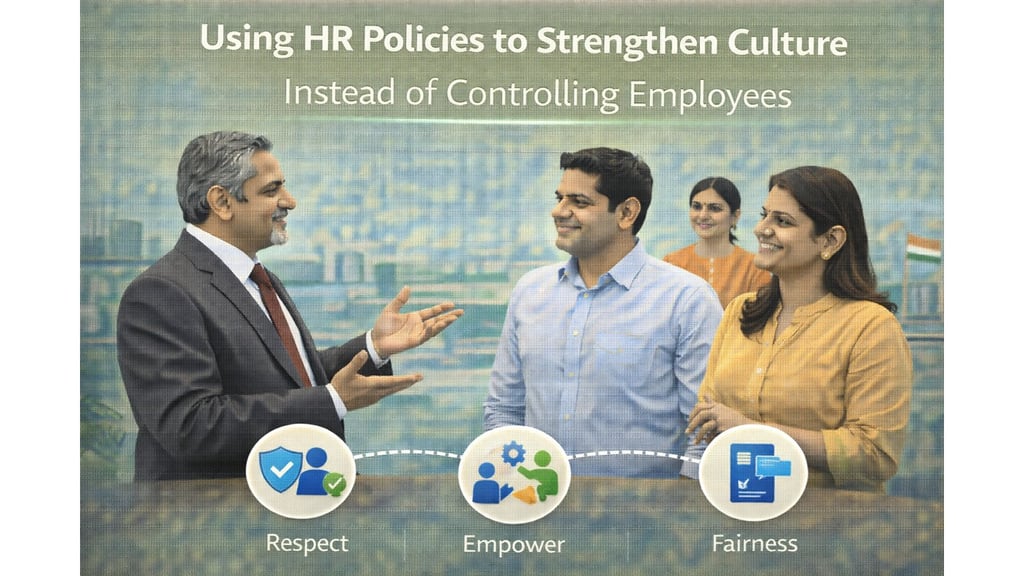
In many Indian organisations, HR policies are seen as instruments of control rather than enablers of a healthy workplace. Employees often read policies only when something goes wrong, reinforcing the belief that policies exist to restrict behaviour.
However, well-designed HR policies can strengthen culture by providing clarity, fairness, and trust. This article explores how HR teams can use policies to support employee experience rather than undermine it.
Why Policy Design Influences Culture
HR policies shape everyday behaviour by:
Setting expectations clearly
Reducing ambiguity in decision-making
Protecting both employees and managers
Reflecting organisational values in action
When policies are written and applied thoughtfully, they reinforce consistency rather than fear.
Common Policy Pitfalls in Indian Workplaces
Policies often weaken culture when they:
Are copied without adapting to context
Use punitive or legalistic language
Are enforced selectively
Ignore operational realities
Such practices create distrust and encourage workarounds.
Writing Policies That Support Employee Experience
Culture-supportive policies:
Use simple, respectful language
Explain the “why” behind rules
Allow reasonable managerial discretion
Balance compliance with human judgement
Clarity builds confidence when employees understand both intent and boundaries.
Applying Policies with Consistency and Empathy
The way policies are applied matters as much as their content. HR should:
Guide managers on fair interpretation
Avoid rigid enforcement without context
Document exceptions transparently
Review policies periodically based on feedback
Policies should act as guardrails, not handcuffs.
HR’s Role as Policy Custodian
HR’s responsibility includes:
Ensuring legal compliance
Aligning policies with evolving culture
Educating managers and employees
Monitoring unintended cultural impact
Effective HR teams see policies as living documents, not static rulebooks.
Conclusion
HR policies do not have to be instruments of control. When designed and applied thoughtfully, they create fairness, clarity, and trust.
In Indian organisations, culture strengthens when employees experience policies as supportive frameworks rather than enforcement tools.
HR Checklist: Using Policies to Reinforce Culture
🗹 Write policies in simple, respectful language
🗹 Align policy intent with organisational values
🗹 Avoid one-size-fits-all enforcement
🗹 Train managers on policy interpretation
🗹 Document exceptions transparently
🗹 Review policies regularly for relevance
🗹 Balance compliance with empathy
🗹 Communicate policy rationale clearly
🗹 Monitor cultural impact of policies
Policy Design and Cultural Impact
Conclusion--
Effective labour law compliance depends on how well HR operations, payroll, and business processes work together. When compliance is embedded into everyday workflows, organisations reduce risk, improve accuracy, and build sustainable governance systems. HR teams that prioritise integration over isolation are better positioned to manage compliance confidently and consistently.
HireDesk India © 2026 | All Rights Reserved
"Thoughtful guidance for everyday HR"


Quick Links
Topics
Connect
_______________________________________________________________________________________________________________________________________________________________________________________
HireDesk is a free HR knowledge platform focused on practical, India-specific workplace guidance. We help HR professionals, managers, and learners navigate people practices with clarity, responsibility, and real-world relevance.