Using HR Resources Responsibly: Templates, Checklists, and Practical Guides
HR resources such as templates, checklists, and practical guides can support consistency and efficiency in day-to-day HR work. However, using these resources without understanding context or applicability can lead to ineffective or inappropriate outcomes.
RESOURCES, COMMUNITY & CONTRIBUTION
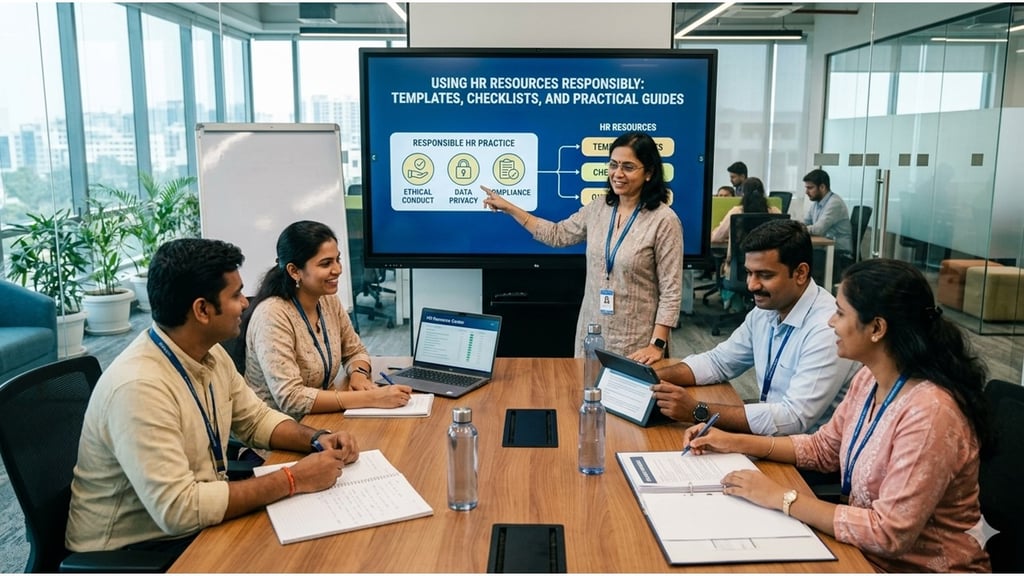
This article explains how HR professionals can use templates, checklists, and practical guides responsibly, ensuring they are adapted thoughtfully to organisational needs and workplace realities.
Why HR Resources Are Useful
HR resources help professionals:
Structure processes
Reduce errors
Improve documentation
Build confidence in execution
They are particularly helpful for early-career HR professionals and small HR teams.
Understanding the Limits of Templates
Templates are not universal solutions. Blind adoption can lead to:
Misalignment with organisational context
Compliance risks
Inconsistent practices
HR professionals must always assess relevance before use.
Adapting Resources to Organisational Context
Responsible adaptation involves:
Reviewing applicable laws and policies
Customising language and scope
Aligning with organisational culture
Context-aware application improves effectiveness.
Using Checklists as Guidance, Not Control
Checklists help ensure steps are not missed, but they should:
Support judgement, not replace it
Encourage consistency without rigidity
Flexibility is key in real-world HR practice.
Ethical Use of Shared Resources
HR professionals should:
Respect intellectual effort
Avoid misrepresentation
Use resources for learning and improvement
Ethical use strengthens professional credibility.
Conclusion
HR resources are valuable tools when used responsibly. Understanding their purpose, adapting them thoughtfully, and applying professional judgement ensures they support effective HR practice.
HireDesk India © 2026 | All Rights Reserved
"Thoughtful guidance for everyday HR"


Quick Links
Topics
Connect
_______________________________________________________________________________________________________________________________________________________________________________________
HireDesk is a free HR knowledge platform focused on practical, India-specific workplace guidance. We help HR professionals, managers, and learners navigate people practices with clarity, responsibility, and real-world relevance.