
Using Performance Data for Organisational Decisions
PERFORMANCE & DEVELOPMENT
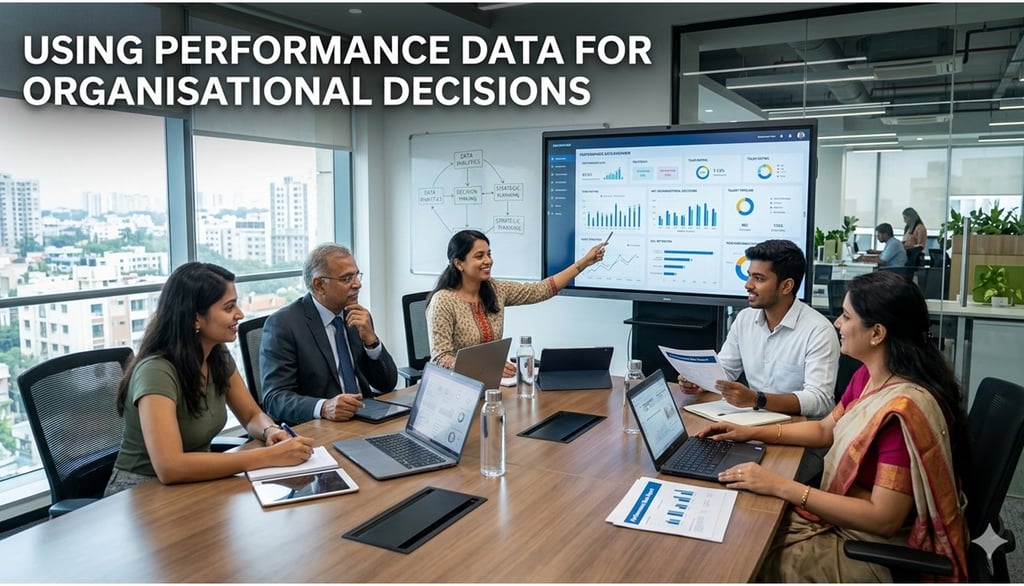
Performance data is often collected diligently but used narrowly—limited to appraisals, ratings, or compensation discussions. When used effectively, however, performance data becomes a strategic input for organisational decisions across talent, workforce planning, capability building, and leadership development.
This article explains how HR and business leaders can use performance data responsibly and meaningfully to inform decisions beyond individual evaluations.
Understanding Performance Data in Context
Performance data includes more than final ratings. It typically covers:
Goal achievement levels
Behavioural and competency assessments
Feedback trends
Improvement or decline patterns
Manager and peer observations
Used together, these provide insights into capability, readiness, and organisational health.
Why Performance Data Should Inform Organisational Decisions
When performance data is ignored or underused:
Decisions rely on perception or seniority
Talent risks remain hidden
Development investments lack direction
Structured use of performance data enables:
Better workforce and succession planning
Fairer talent decisions
Stronger alignment between people and strategy
Key Organisational Decisions Supported by Performance Data
1. Talent Identification and Succession Planning
Performance trends help identify:
Consistent high contributors
Employees ready for expanded roles
Critical roles at risk due to weak pipelines
Performance data should be reviewed over time, not in isolation.
2. Learning and Development Prioritisation
Aggregated performance data reveals:
Common skill gaps
Leadership capability shortfalls
Functional strengths and weaknesses
This allows HR to move from generic training to targeted capability-building.
3. Workforce Planning and Role Design
Performance patterns indicate:
Roles that are overloaded or mis-scoped
Teams dependent on a few high performers
Areas where productivity varies significantly
Such insights support better workforce structuring and manpower decisions.
4. Career and Mobility Decisions
Performance data informs:
Internal mobility readiness
Role-fit assessments
Stretch assignment selection
This reduces trial-and-error in internal movements.
5. Leadership and Manager Effectiveness
Team-level performance patterns often reflect:
Quality of goal-setting
Coaching effectiveness
Feedback culture
Performance data can highlight where manager capability development is needed.
Sample View: Organisational Use of Performance Data
Checklist: Using Performance Data Responsibly
☐ Review performance trends over multiple cycles
☐ Combine quantitative and qualitative inputs
☐ Avoid single-rating decisions
☐ Protect confidentiality and data access
☐ Train managers on data interpretation
☐ Use data to support development, not punishment
Risks of Misusing Performance Data
Poor use of performance data can:
Reinforce bias
Create labelling and stagnation
Damage trust in performance systems
Data should inform judgement, not replace it.
Role of HR in Performance Data Governance
HR ensures that performance data:
Is interpreted in context
Is used consistently across functions
Supports organisational objectives
Does not become a shortcut for difficult conversations
Strong governance balances insight with ethics.
Creating a Performance-Informed Culture
When performance data is used well:
Employees understand how outcomes matter
Managers become more deliberate in reviews
Decisions feel fair and evidence-based
Over time, this builds confidence in the performance management system.
Key Takeaway
Performance data is most powerful when it moves beyond appraisal cycles and informs broader organisational decisions. Used thoughtfully, it strengthens talent outcomes, workforce planning, and leadership effectiveness.
Conclusion--
Effective labour law compliance depends on how well HR operations, payroll, and business processes work together. When compliance is embedded into everyday workflows, organisations reduce risk, improve accuracy, and build sustainable governance systems. HR teams that prioritise integration over isolation are better positioned to manage compliance confidently and consistently.
HireDesk India © 2026 | All Rights Reserved
"Thoughtful guidance for everyday HR"


Quick Links
Topics
Connect
_______________________________________________________________________________________________________________________________________________________________________________________
HireDesk is a free HR knowledge platform focused on practical, India-specific workplace guidance. We help HR professionals, managers, and learners navigate people practices with clarity, responsibility, and real-world relevance.