
Using Performance Data for Talent Decisions
PERFORMANCE & DEVELOPMENT
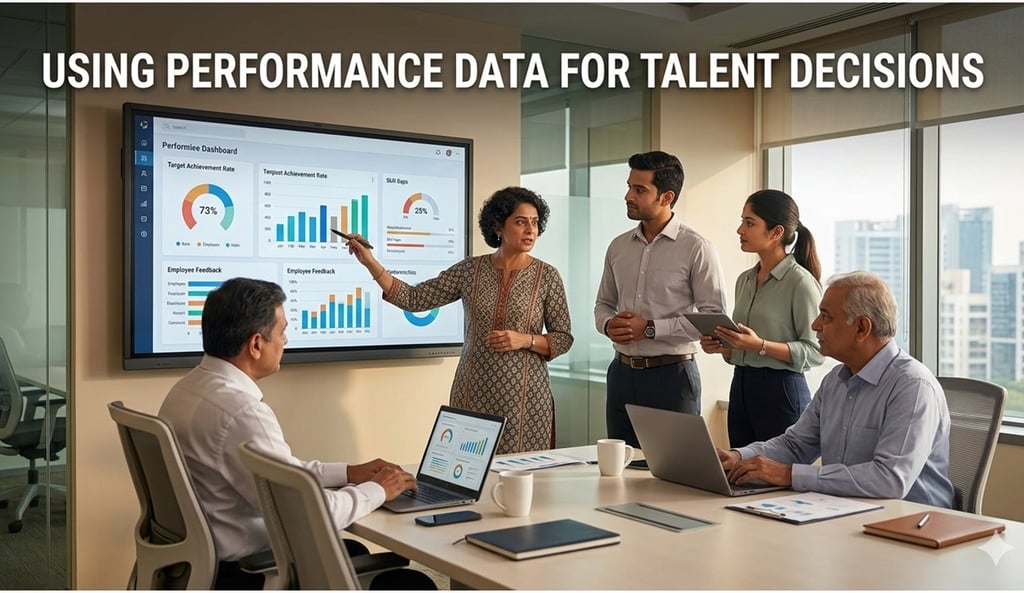
Performance data is collected extensively across organisations, yet its use often remains limited to appraisal cycles and compensation reviews. When applied thoughtfully, performance data can become a powerful input for broader talent decisions such as promotions, role movements, development planning, and succession readiness.
This article explains how HR teams can use performance data responsibly and effectively to support fair, informed, and future-oriented talent decisions.
Why Performance Data Matters in Talent Decisions
Talent decisions shape organisational capability over the long term. Relying only on manager judgement or recent outcomes can introduce bias and inconsistency.
Performance data helps organisations:
Improve objectivity in decisions
Identify high-potential and high-impact employees
Align talent moves with business needs
Reduce perceptions of favouritism
However, data must be interpreted carefully and within context.
Types of Performance Data Commonly Used
1. Goal Achievement and KPIs
Completion of targets and deliverables
Quality, timeliness, and consistency of results
Alignment with role expectations
This data reflects what was achieved.
2. Behavioural and Competency Ratings
Collaboration and communication
Leadership behaviours
Problem-solving and adaptability
This data reflects how results were achieved.
3. Trend and Consistency Data
Performance over multiple cycles
Improvement or decline patterns
Stability across roles or managers
Trends are often more meaningful than single-cycle ratings.
4. Feedback Inputs
Manager assessments
Peer or stakeholder feedback
Customer or internal client feedback
These inputs add depth when used appropriately.
Key Talent Decisions Informed by Performance Data
Promotions and Role Progression
Performance data helps assess readiness for higher responsibility, not just past success in the current role.
Development and Learning Investments
Identifies skill gaps, capability needs, and suitable development pathways.
Succession Planning
Supports identification of potential successors based on sustained performance and behaviour patterns.
Role Realignment and Mobility
Highlights employees suited for lateral moves, stretch roles, or new assignments.
Sample View: Linking Performance Data to Talent Decisions
Checklist: Using Performance Data Effectively
☐ Use multi-cycle data rather than single-year results
☐ Combine quantitative results with behavioural inputs
☐ Train managers on objective data interpretation
☐ Document rationale behind key talent decisions
☐ Review decisions periodically for consistency
Common Pitfalls to Avoid
Over-reliance on ratings without context
Ignoring role complexity or environmental factors
Treating performance data as absolute truth
Using data punitively rather than developmentally
Responsible use builds trust and credibility.
Role of HR in Data-Based Talent Decisions
HR should:
Define clear guidelines for data usage
Ensure calibration and consistency
Protect against bias and misuse
Enable transparency in decision-making
HR’s role is to balance data discipline with human judgement.
Key Takeaway
Performance data, when used thoughtfully, strengthens talent decisions by improving fairness, consistency, and future readiness. Its true value lies not in numbers alone, but in how well the data is interpreted and applied.
Conclusion--
Effective labour law compliance depends on how well HR operations, payroll, and business processes work together. When compliance is embedded into everyday workflows, organisations reduce risk, improve accuracy, and build sustainable governance systems. HR teams that prioritise integration over isolation are better positioned to manage compliance confidently and consistently.
HireDesk India © 2026 | All Rights Reserved
"Thoughtful guidance for everyday HR"


Quick Links
Topics
Connect
_______________________________________________________________________________________________________________________________________________________________________________________
HireDesk is a free HR knowledge platform focused on practical, India-specific workplace guidance. We help HR professionals, managers, and learners navigate people practices with clarity, responsibility, and real-world relevance.