
Using Technology to Enhance Performance Management
PERFORMANCE & DEVELOPMENT
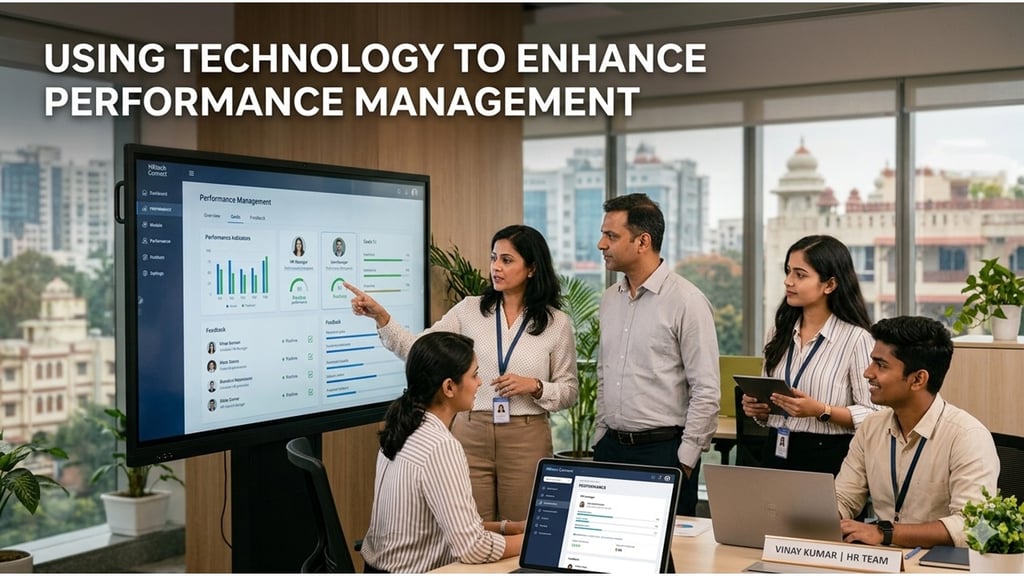
Performance management has evolved beyond annual appraisals and manual tracking. With growing workforce scale, remote work, and skill diversity, technology plays a central role in enabling effective, continuous, and fair performance management.
This article explains how performance management technology supports goal alignment, feedback, development, and decision-making—without replacing managerial judgement.
Why Technology Matters in Performance Management
Manual or spreadsheet-driven performance processes often result in:
Inconsistent goal setting
Delayed feedback
Poor documentation
Limited visibility for HR and leadership
Technology helps standardise processes while allowing flexibility at the role and team level.
Core Areas Where Technology Adds Value
1. Goal Setting and Alignment
Digital platforms enable:
Organisation-wide goal cascading
Alignment of individual goals with team and business objectives
Mid-cycle goal revisions with proper documentation
This ensures clarity and traceability across the performance cycle.
2. Continuous Feedback and Check-Ins
Technology supports:
Regular feedback exchanges
Structured one-on-one notes
Real-time performance observations
This shifts performance management from an event-based to a continuous process.
3. Performance Reviews and Documentation
Systems provide:
Standardised appraisal formats
Role-based competency and KPI assessments
Historical performance records
This improves fairness, consistency, and audit readiness.
4. Development Planning and Learning Linkages
Performance systems can integrate with:
Learning management platforms
Individual development plans (IDPs)
Skill-gap analysis
This ensures performance conversations lead to development action, not just ratings.
5. Analytics and Decision Support
Technology enables:
Performance trend analysis
High-potential identification
Attrition and performance correlation
HR gains insights to support talent and workforce planning decisions.
Sample View: Technology-Enabled Performance Management
Checklist: Using Technology Effectively in Performance Management
☐ Performance goals are digitally captured and aligned
☐ Continuous feedback is encouraged and recorded
☐ Appraisal processes are standardised across roles
☐ Development plans are linked to performance outcomes
☐ Performance data is analysed for trends and risks
☐ Managers are trained to use systems effectively
Role of HR
HR’s responsibility is to:
Select tools aligned with organisational maturity
Define clear process ownership and governance
Ensure technology supports—not replaces—managerial judgement
Monitor adoption, data quality, and system effectiveness
HR acts as the custodian of performance data and process integrity.
Key Takeaway
Technology enhances performance management by providing structure, visibility, and insights, while managers provide context, judgement, and human connection. When used thoughtfully, performance systems strengthen accountability, development, and organisational outcomes.
Conclusion--
Effective labour law compliance depends on how well HR operations, payroll, and business processes work together. When compliance is embedded into everyday workflows, organisations reduce risk, improve accuracy, and build sustainable governance systems. HR teams that prioritise integration over isolation are better positioned to manage compliance confidently and consistently.
HireDesk India © 2026 | All Rights Reserved
"Thoughtful guidance for everyday HR"


Quick Links
Topics
Connect
_______________________________________________________________________________________________________________________________________________________________________________________
HireDesk is a free HR knowledge platform focused on practical, India-specific workplace guidance. We help HR professionals, managers, and learners navigate people practices with clarity, responsibility, and real-world relevance.