
Vendor and Contractor Compliance Audits: HR Framework for Factories
INDUSTRIAL RELATIONS & FACTORY HR
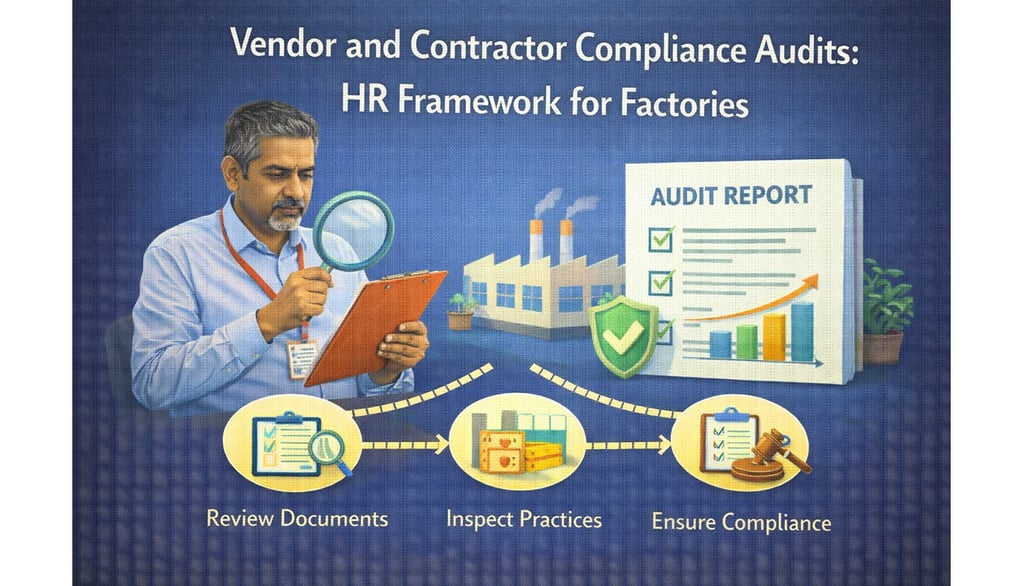
Factories in India depend heavily on vendors and contractors for operations, maintenance, logistics, security, housekeeping, and specialised technical work. While these third parties deploy manpower, legal accountability for labour compliance often rests with the principal employer.
Non-compliance by vendors or contractors frequently results in inspection observations, penalties, or litigation against the factory—irrespective of contractual clauses. A structured vendor and contractor compliance audit framework is therefore essential for factory HR teams to protect the organisation and ensure lawful workforce management.
This article outlines how HR should design, execute, and sustain compliance audits for vendors and contractors in factory environments.
Why Compliance Audits Are Necessary
Vendor and contractor audits help factory HR to:
Detect statutory non-compliance before inspections
Prevent principal employer liability
Ensure fair treatment of deployed workers
Maintain discipline across multiple vendors
Build defensible documentation during disputes
Without audits, compliance gaps remain hidden until they become costly enforcement actions.
Scope of Vendor and Contractor Compliance Audits
An effective audit framework must cover both documentation and actual practices.
Key audit areas include:
Licensing and registration validity
Wages and attendance compliance
EPF, ESIC, and statutory contributions
Safety, health, and welfare provisions
Deployment control and identity management
Audits should apply to all vendors deploying manpower, not only labour contractors.
Types of Compliance Audits HR Should Conduct
1. Pre-Onboarding Compliance Audit
Conducted before awarding or renewing contracts.
Focus areas:
Labour licence and registrations
Past compliance track record
Statutory readiness and documentation systems
This prevents onboarding high-risk vendors.
2. Periodic Compliance Audit
Conducted quarterly or half-yearly.
Focus areas:
Wage payments and minimum wage compliance
Attendance vs wage reconciliation
EPF and ESIC challans and returns
Leave and overtime records
This is the most critical audit for ongoing compliance.
3. Surprise or Spot Audits
Conducted without prior notice.
Focus areas:
Actual worker deployment
Safety practices and PPE usage
Identity cards and access control
Spot audits reveal ground-level realities often missed in planned audits.
HR’s Role in Audit Execution
Factory HR must lead audits with authority, consistency, and documentation discipline.
Key HR responsibilities include:
Preparing audit checklists aligned with laws
Reviewing registers and returns personally
Interviewing deployed workers where required
Recording findings and corrective actions
Tracking closure of audit gaps
Audits should not be delegated entirely to external consultants.
Handling Non-Compliance Findings
When gaps are identified, HR should:
Issue written audit observations
Set clear timelines for rectification
Link compliance to payment releases
Escalate repeated violations to management
Terminate or suspend high-risk vendors if required
Tolerance of repeated non-compliance weakens HR’s authority and increases risk.
Sustaining a Strong Audit Framework
To keep audits effective:
Standardise audit formats and frequency
Maintain vendor compliance scorecards
Integrate audits with vendor renewal decisions
Train vendors on compliance expectations
Review audit effectiveness annually
Compliance audits must become a routine governance process, not a reaction to inspections.
Conclusion
Vendor and contractor compliance audits are a critical risk management tool for factory HR in India. Given the principal employer’s legal exposure, HR cannot afford to rely on contractual assurances alone.
A disciplined, structured audit framework helps factories ensure statutory compliance, protect worker rights, and maintain stable industrial relations. When audits are consistent and enforceable, compliance becomes a shared responsibility rather than a recurring crisis.
HR Checklist: Vendor and Contractor Compliance Audits
🗹 Conduct pre-onboarding compliance audits before contract award
🗹 Audit all manpower-deploying vendors periodically
🗹 Verify wages, attendance, and overtime alignment
🗹 Review EPF and ESIC challans every audit cycle
🗹 Perform surprise audits at the shop-floor level
🗹 Document audit findings and corrective actions
🗹 Link vendor payments to compliance status
🗹 Track repeat violations and escalate appropriately
🗹 Maintain audit records for inspections and disputes
Key Areas Covered in Vendor & Contractor Compliance Audits
Conclusion--
Effective labour law compliance depends on how well HR operations, payroll, and business processes work together. When compliance is embedded into everyday workflows, organisations reduce risk, improve accuracy, and build sustainable governance systems. HR teams that prioritise integration over isolation are better positioned to manage compliance confidently and consistently.
HireDesk India © 2026 | All Rights Reserved
"Thoughtful guidance for everyday HR"


Quick Links
Topics
Connect
_______________________________________________________________________________________________________________________________________________________________________________________
HireDesk is a free HR knowledge platform focused on practical, India-specific workplace guidance. We help HR professionals, managers, and learners navigate people practices with clarity, responsibility, and real-world relevance.