
Voice of Employee in India: Encouraging Speaking Up Without Fear
EMPLOYEE EXPERIENCE & CULTURE
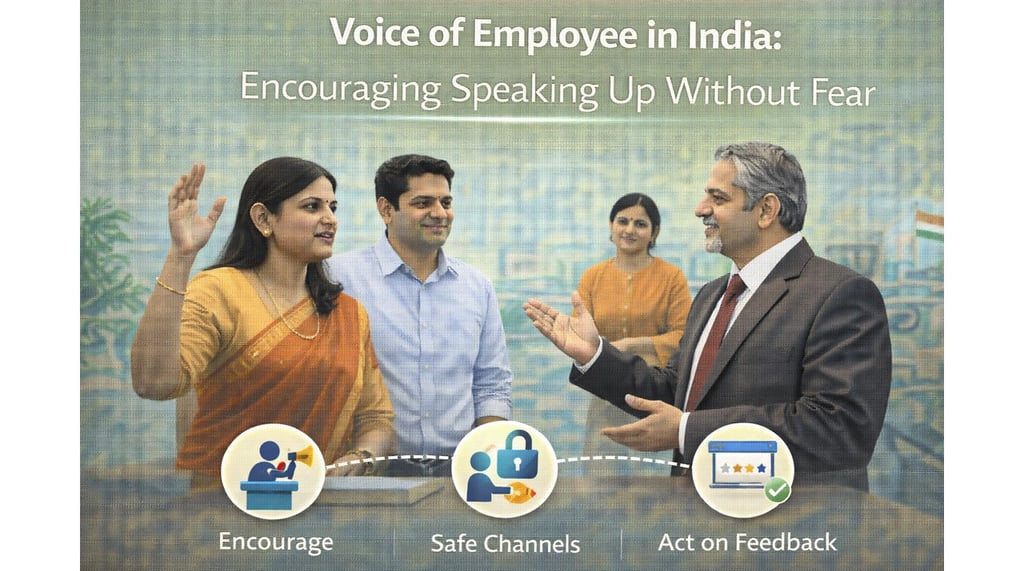
Many Indian organisations claim to value employee voice, yet employees often remain hesitant to speak openly. Fear of being labelled difficult, disloyal, or negative discourages honest input, even when systems exist.
Voice of Employee (VoE) is not about collecting opinions. It is about creating conditions where employees feel safe to share concerns, ideas, and feedback without fear of consequences. This article explains how HR can enable this in the Indian context.
Why Employees Hesitate to Speak Up
Employees hold back because:
Past feedback led to subtle retaliation
Hierarchy discourages questioning decisions
Anonymity is not trusted
Feedback is ignored or debated
Silence should not be mistaken for satisfaction.
What “Speaking Up” Really Means in India
In Indian workplaces, speaking up may look like:
Indirect or cautious communication
Sharing concerns through intermediaries
Waiting for formal opportunities
Testing reactions before openness
HR must recognise these signals rather than expecting direct confrontation.
Designing Safe Voice Channels
Effective VoE systems:
Offer multiple listening channels
Allow anonymity with clear safeguards
Set expectations on how input will be used
Close the feedback loop visibly
Employees trust systems that demonstrate consistency.
Preventing Retaliation and Fear
HR’s credibility depends on:
Actively monitoring post-feedback consequences
Intervening early in retaliation patterns
Protecting confidentiality strictly
Reinforcing non-retaliation norms with managers
Fear spreads faster than trust if unchecked.
Turning Voice into Action
Listening alone is insufficient. HR should:
Analyse feedback trends
Share actions or rationale transparently
Involve leadership in responses
Treat voice data as early risk indicators
Action reinforces belief in the process.
Conclusion
Encouraging employee voice in India requires patience, protection, and persistence. Systems matter, but trust matters more.
When employees believe they can speak without fear, organisations gain insight, resilience, and long-term stability.
HR Checklist: Strengthening Voice of Employee
🗹 Acknowledge fear as a real barrier
🗹 Offer multiple channels for speaking up
🗹 Ensure anonymity where appropriate
🗹 Protect employees from retaliation
🗹 Set clear expectations on feedback usage
🗹 Close the loop with visible action
🗹 Train managers on non-defensive listening
🗹 Monitor patterns and cultural risks
🗹 Reinforce speaking up as a positive behaviour
Voice Channels and Trust Signals
Conclusion--
Effective labour law compliance depends on how well HR operations, payroll, and business processes work together. When compliance is embedded into everyday workflows, organisations reduce risk, improve accuracy, and build sustainable governance systems. HR teams that prioritise integration over isolation are better positioned to manage compliance confidently and consistently.
HireDesk India © 2026 | All Rights Reserved
"Thoughtful guidance for everyday HR"


Quick Links
Topics
Connect
_______________________________________________________________________________________________________________________________________________________________________________________
HireDesk is a free HR knowledge platform focused on practical, India-specific workplace guidance. We help HR professionals, managers, and learners navigate people practices with clarity, responsibility, and real-world relevance.