
Wage Negotiations and Productivity-Linked Settlements in Factories
INDUSTRIAL RELATIONS & FACTORY HR
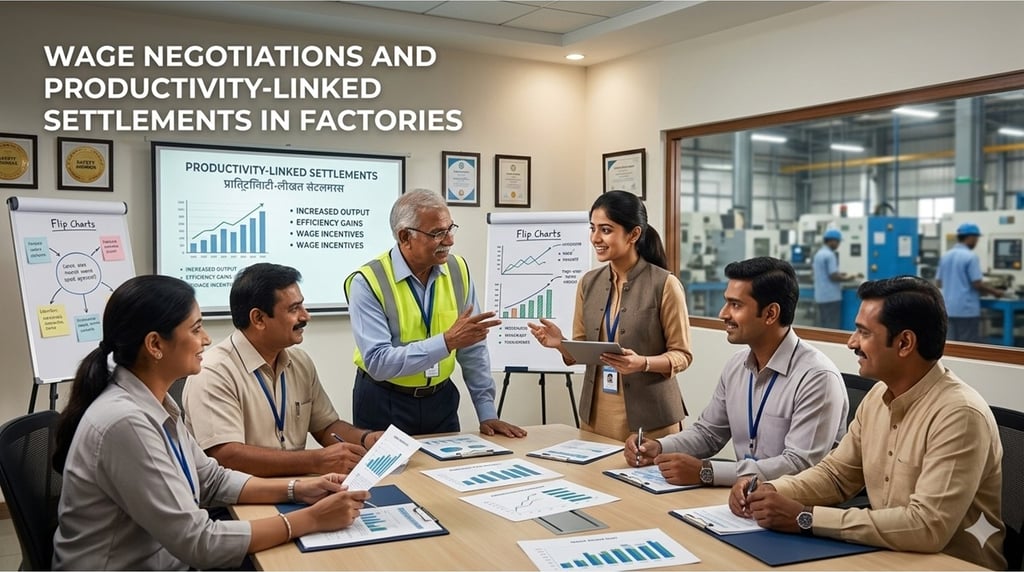

Wage negotiations are one of the most sensitive and consequential processes in factory industrial relations. Poorly handled negotiations can lead to unrest, strikes, or long-term distrust. Well-structured negotiations, on the other hand, can improve productivity, cost predictability, and workforce stability.
For Factory HR teams, wage discussions are not just about numbers—they are about credibility, sustainability, and industrial peace.
Understanding Wage Negotiations in Factory Settings
Unlike corporate environments, factory wage negotiations typically involve:
Recognised trade unions
Collective bargaining processes
Multi-year wage settlements
Linkages to productivity, efficiency, or profitability
Negotiations often occur under the framework of the Industrial Disputes Act / IR Code, with conciliation playing a key role.
Common Triggers for Wage Negotiations
Wage talks are usually initiated due to:
Expiry of an existing settlement
Rising cost of living (DA pressure)
Minimum wage revisions by the government
Increased workload, capacity expansion, or new shifts
Comparisons with neighbouring factories
HR must anticipate these triggers well before unions formally raise demands.
What Is a Productivity-Linked Settlement
A productivity-linked settlement connects wage increases to measurable performance indicators instead of flat increments.
Typical productivity parameters include:
Output per worker
Reduction in rejection or wastage
Attendance and man-days
Machine utilisation
Cost savings or efficiency improvements
Such settlements help align employee interests with business outcomes.
Benefits of Productivity-Linked Wage Settlements
For factories, these settlements offer multiple advantages:
Controlled and predictable wage costs
Improved shop-floor discipline
Higher ownership by workers
Reduced adversarial bargaining
Better justification to management and auditors
However, the design must be simple, transparent, and measurable.
HR’s Role in Wage Negotiations
Factory HR plays a central coordinating role:
Preparing cost and productivity data
Benchmarking industry wages
Drafting negotiation strategies
Supporting management negotiators
Ensuring legal and procedural compliance
Communicating outcomes to employees
HR must act as a bridge between business realities and workforce expectations.
Structuring a Wage Settlement
A well-drafted wage settlement should clearly cover:
Settlement period (usually 3–5 years)
Wage components and increments
Productivity or performance criteria
Payment timelines
Peace clause and dispute resolution
Applicability and exclusions
Ambiguity in settlement terms is a major source of future disputes.
Common Pitfalls HR Must Avoid
Over-promising during negotiations
Complex productivity formulas that workers don’t understand
Ignoring cost impact over multiple years
Not documenting minutes of meetings
Inconsistent implementation after signing
Credibility lost during one settlement impacts negotiations for years.
Conclusion
Wage negotiations are inevitable in factory environments, but conflict is not. With data-driven preparation, transparent communication, and thoughtfully designed productivity linkages, Factory HR teams can transform wage settlements into tools for stability and growth rather than sources of friction.
Strong wage settlements are built not just on agreement—but on mutual trust and shared accountability.
🗹 HR Checklist: Managing Wage Negotiations Effectively
🗹 Track settlement expiry dates well in advance
🗹 Analyse wage costs and affordability
🗹 Benchmark with local and industry standards
🗹 Identify realistic productivity parameters
🗹 Maintain clear negotiation records
🗹 Draft unambiguous settlement clauses
🗹 Communicate outcomes clearly to workers
🗹 Monitor post-settlement compliance
Wage Settlement – HR Reference Table
Conclusion--
Effective labour law compliance depends on how well HR operations, payroll, and business processes work together. When compliance is embedded into everyday workflows, organisations reduce risk, improve accuracy, and build sustainable governance systems. HR teams that prioritise integration over isolation are better positioned to manage compliance confidently and consistently.
HireDesk India © 2026 | All Rights Reserved
"Thoughtful guidance for everyday HR"


Quick Links
Topics
Connect
_______________________________________________________________________________________________________________________________________________________________________________________
HireDesk is a free HR knowledge platform focused on practical, India-specific workplace guidance. We help HR professionals, managers, and learners navigate people practices with clarity, responsibility, and real-world relevance.