
Women Workers in Factories: Legal Compliance and HR Practices
INDUSTRIAL RELATIONS & FACTORY HR
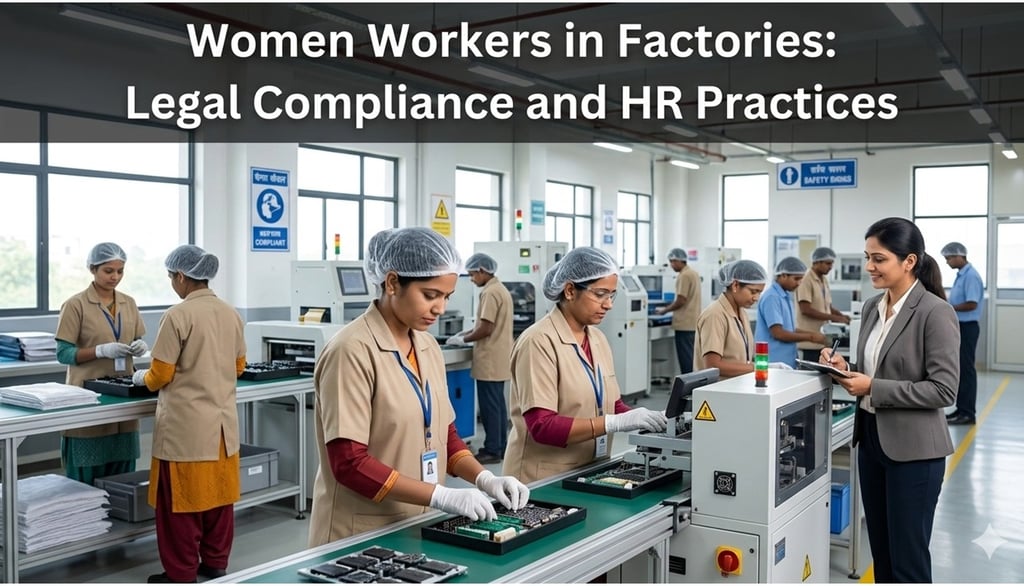
The participation of women in Indian factories has increased steadily across manufacturing sectors. With this growth comes a heightened responsibility for Factory HR teams to ensure legal compliance, workplace safety, and equitable treatment.
Indian labour laws provide specific protections and conditions for women workers, particularly in relation to working hours, safety, welfare, and dignity at work. Non-compliance not only attracts penalties but also damages employer credibility and employee trust.
This article explains what Factory HR must do to manage women workers lawfully and responsibly.
Legal Framework Governing Women Workers
Key laws and rules impacting women workers in factories include:
Factories Act, 1948 and State Factory Rules
Maternity Benefit Act, 1961
Occupational Safety, Health and Working Conditions Code
Sexual Harassment of Women at Workplace Act, 2013
HR must ensure that all applicable provisions are implemented in practice, not just on paper.
Working Hours and Night Shifts
Women workers may be employed during night shifts only where permitted by state rules and subject to conditions such as:
Written consent
Safe transportation
Adequate lighting and security
Presence of women supervisors or wardens
HR must strictly follow state-specific permissions and conditions.
Safety and Workplace Facilities
Factories employing women must ensure:
Separate and clean sanitation facilities
Adequate lighting and ventilation
Safe access within factory premises
First-aid and medical support
Safety lapses involving women workers attract severe scrutiny during inspections.
Maternity Benefits and HR Administration
HR responsibilities include:
Tracking eligibility and maternity leave periods
Payment of maternity benefits on time
Protecting employment during maternity leave
Providing nursing breaks and facilities where applicable
Improper handling often results in complaints and legal notices.
Prevention of Sexual Harassment (POSH)
Every factory must:
Constitute an Internal Committee (IC)
Conduct regular awareness sessions
Display POSH policy and committee details
Handle complaints confidentially and promptly
POSH compliance is non-negotiable and closely monitored.
HR Best Practices for Managing Women Workers
Beyond statutory compliance, HR should:
Promote respectful workplace behaviour
Ensure equal pay for equal work
Address safety concerns proactively
Encourage reporting without fear
Strong practices reduce attrition and industrial relations issues.
Conclusion
Employing women workers in factories brings both opportunity and responsibility. Compliance with legal provisions must be embedded into daily operations through disciplined HR processes and sensitive management practices.
Factory HR teams that prioritise safety, dignity, and fairness create stable workplaces while protecting the organisation from legal and reputational risks.
🗹 Factory HR Checklist for Women Worker Compliance
🗹 Verify state rules for night shift employment
🗹 Obtain consent and provide safe transport
🗹 Maintain separate sanitation facilities
🗹 Ensure maternity benefit compliance
🗹 Constitute and train POSH Internal Committee
🗹 Conduct regular awareness programmes
🗹 Address safety concerns promptly
🗹 Maintain relevant records and displays
Women Workers Compliance – Key HR Responsibility Matrix
Conclusion--
Effective labour law compliance depends on how well HR operations, payroll, and business processes work together. When compliance is embedded into everyday workflows, organisations reduce risk, improve accuracy, and build sustainable governance systems. HR teams that prioritise integration over isolation are better positioned to manage compliance confidently and consistently.
HireDesk India © 2026 | All Rights Reserved
"Thoughtful guidance for everyday HR"


Quick Links
Topics
Connect
_______________________________________________________________________________________________________________________________________________________________________________________
HireDesk is a free HR knowledge platform focused on practical, India-specific workplace guidance. We help HR professionals, managers, and learners navigate people practices with clarity, responsibility, and real-world relevance.