Workforce Analytics in Workforce Planning
WORKFORCE PLANNING & MANPOWER
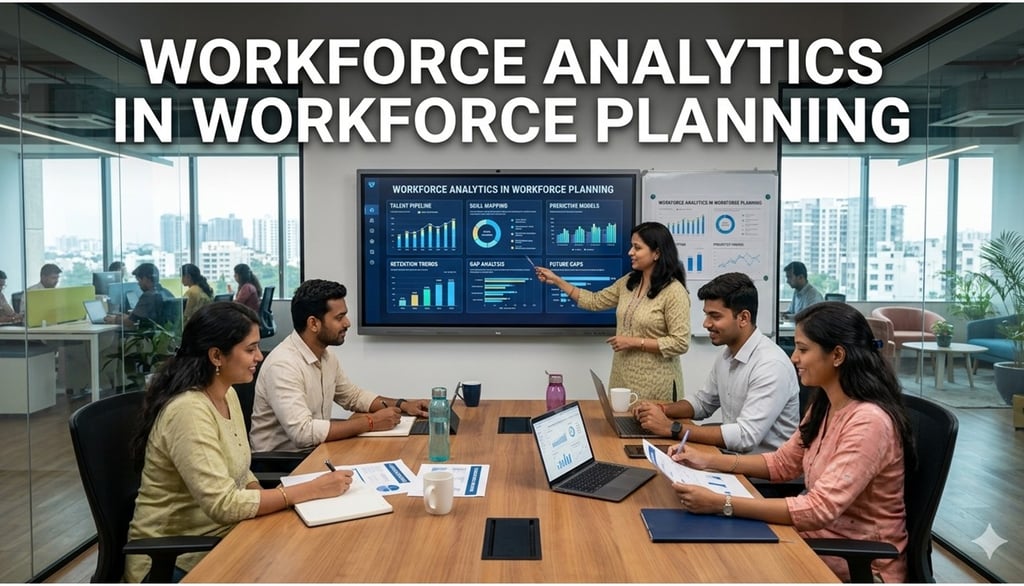
Workforce planning depends on accurate assumptions about people, skills, and future needs. When these assumptions are based only on experience or intuition, plans often fall short. Workforce analytics brings structure and clarity by using workforce data to support informed manpower decisions.
By integrating analytics into workforce planning, organisations can move from reactive staffing to evidence-based planning.
What Is Workforce Analytics?
Workforce analytics is the use of employee and manpower data to understand workforce trends, patterns, and risks. It focuses on analysing historical and current data to support decisions related to hiring, retention, productivity, and skill availability.
In workforce planning, analytics helps answer questions such as:
Where are workforce shortages likely to occur?
Which roles face higher attrition risk?
What skills will be needed in the future?
How effective are current manpower plans?
Why Workforce Analytics Matters for Workforce Planning
Improves Forecast Accuracy
Analytics enables more realistic demand and supply forecasts by identifying trends in hiring, attrition, and workforce movement.
Identifies Workforce Risks Early
Data analysis helps highlight risks such as ageing workforce, skill concentration, or high dependency on specific roles.
Supports Better Resource Allocation
Analytics helps prioritise manpower investments by identifying roles or functions that need immediate attention.
Strengthens Business Alignment
Data-backed workforce insights improve credibility and alignment between HR and business leaders.
Key Workforce Data Used in Planning
Headcount and Structure Data
Includes role-wise, location-wise, and function-wise employee distribution.
Attrition and Movement Trends
Analysing voluntary exits, internal mobility, and promotions helps predict workforce availability.
Skill and Capability Data
Understanding skill depth and coverage supports gap analysis and reskilling decisions.
Productivity and Utilisation Indicators
Helps assess whether current manpower levels are efficient or underutilised.
Using Workforce Analytics in Planning
Step 1: Identify Planning Objectives
Clarify what the workforce plan needs to address—growth, cost control, skill gaps, or restructuring.
Step 2: Select Relevant Metrics
Focus on meaningful metrics such as attrition rate, time-to-fill, skill coverage, and internal fill rate.
Step 3: Analyse Trends and Patterns
Look beyond single data points to identify recurring issues or emerging risks.
Step 4: Link Insights to Actions
Ensure analytics outputs directly inform hiring plans, training priorities, or redeployment decisions.
Light Checklist: Workforce Analytics Readiness
☐ Reliable and updated workforce data available
☐ Clear workforce planning objectives defined
☐ Key manpower metrics identified
☐ Data reviewed at regular intervals
☐ Insights linked to workforce decisions
Practical Use of Analytics in Manpower Planning
In practice, workforce analytics is often used to:
Forecast attrition for critical roles
Identify departments with recurring manpower shortages
Support succession and internal mobility planning
Track workforce cost trends against output
These applications make workforce planning more predictable and measurable.
Common Challenges
Poor data quality or inconsistent reporting
Overloading plans with too many metrics
Limited analytical capability within HR teams
Treating analytics as reports rather than decision tools
Addressing these challenges ensures analytics strengthens workforce planning rather than adding complexity.
Conclusion
Workforce analytics enhances workforce planning by providing visibility into trends, risks, and future requirements. When used thoughtfully, it helps organisations plan manpower with greater confidence and control.
As workforce dynamics become more complex, analytics is no longer optional—it is a critical enabler of effective workforce planning.
Conclusion--
Effective labour law compliance depends on how well HR operations, payroll, and business processes work together. When compliance is embedded into everyday workflows, organisations reduce risk, improve accuracy, and build sustainable governance systems. HR teams that prioritise integration over isolation are better positioned to manage compliance confidently and consistently.
HireDesk India © 2026 | All Rights Reserved
"Thoughtful guidance for everyday HR"


Quick Links
Topics
Connect
_______________________________________________________________________________________________________________________________________________________________________________________
HireDesk is a free HR knowledge platform focused on practical, India-specific workplace guidance. We help HR professionals, managers, and learners navigate people practices with clarity, responsibility, and real-world relevance.