
Workforce Cost Optimisation Without Compromising Capability
WORKFORCE PLANNING & MANPOWER
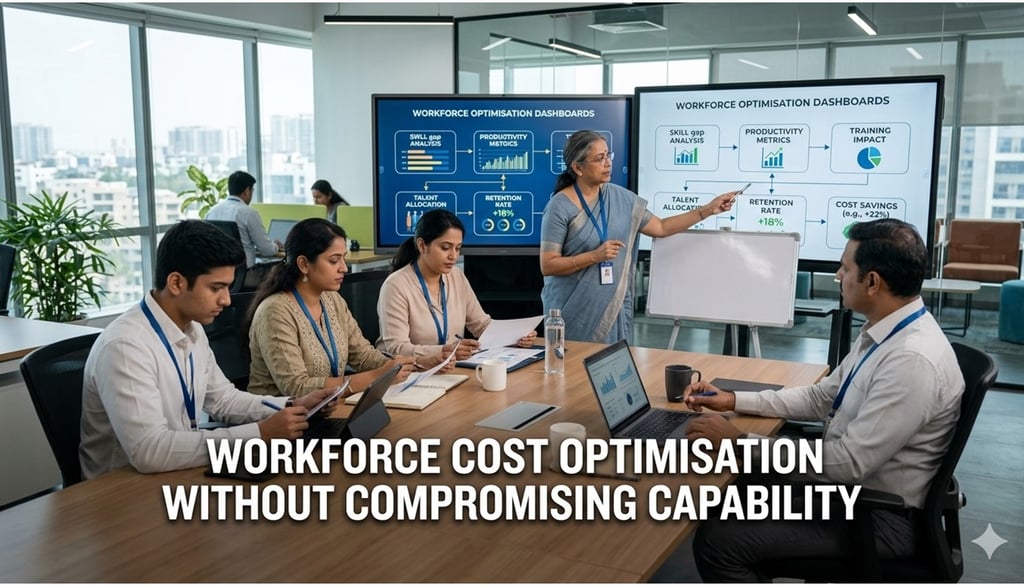
Workforce costs form one of the largest and most sensitive components of organisational expenditure. In Indian organisations, HR is often expected to manage cost pressures while simultaneously ensuring productivity, compliance, and employee morale. Workforce cost optimisation is not about indiscriminate headcount reduction—it is about aligning people costs with business value in a structured and responsible manner.
This article explores how HR can approach workforce cost optimisation practically, without weakening critical capabilities or damaging long-term workforce stability.
Understanding Workforce Costs Beyond Salaries
Workforce cost is more than monthly payroll. HR should consider the full cost structure, including:
Fixed compensation
Variable pay and incentives
Statutory contributions (PF, ESIC, gratuity)
Overtime and shift allowances
Contract and vendor costs
Training and onboarding expenses
Attrition and replacement costs
A clear view of total workforce cost helps HR move discussions from headcount numbers to cost drivers.
Common Triggers for Cost Optimisation
Organisations usually review workforce costs when facing:
Revenue slowdown or margin pressure
Business restructuring or expansion
Automation or process redesign
Compliance or audit concerns
High attrition in specific roles
HR’s role is to respond with data-backed options, not reactive cuts.
Practical Workforce Cost Optimisation Levers
HR can explore multiple levers before considering reductions:
1. Role and Structure Review
Identify role overlaps or unclear responsibilities
Review span of control and reporting layers
Redesign roles to improve utilisation
2. Skill-Based Deployment
Redeploy employees with transferable skills
Upskill instead of hiring externally
Align skills with future demand areas
3. Mix of Employment Models
Balance permanent, contract, and project-based roles
Use short-term staffing for cyclical demand
Regularly review vendor and contract costs
4. Compensation Alignment
Review internal pay parity
Align variable pay with performance outcomes
Ensure statutory compliance to avoid penalties
What HR Should Avoid
Cost optimisation efforts fail when HR:
Focuses only on salary reductions
Cuts critical or compliance-heavy roles
Ignores long-term talent impact
Acts without stakeholder alignment
Communicates poorly with employees
Cost actions without context often lead to higher attrition, disengagement, and rehiring costs.
Linking Cost Optimisation with Workforce Planning
Effective cost optimisation should be aligned with:
Manpower forecasting
Skills gap analysis
Succession planning
Business growth or contraction plans
This ensures that cost decisions support future readiness, not just short-term savings.
Workforce Cost Optimisation Checklist for HR
Before taking action
☐ Do we understand total workforce cost, not just payroll?
☐ Are cost pressures short-term or structural?
☐ Have business priorities been clarified?
While evaluating options
☐ Can redeployment or reskilling address the issue?
☐ Are there role overlaps or inefficiencies?
☐ Have alternative employment models been considered?
Before implementation
☐ Are compliance and statutory obligations protected?
☐ Is communication planned clearly and empathetically?
☐ Are long-term capability risks assessed?
Closing Perspective
Workforce cost optimisation is most effective when HR acts as a business partner, balancing financial discipline with people sustainability. When approached thoughtfully, it strengthens organisational resilience rather than weakening the workforce.
Conclusion--
Effective labour law compliance depends on how well HR operations, payroll, and business processes work together. When compliance is embedded into everyday workflows, organisations reduce risk, improve accuracy, and build sustainable governance systems. HR teams that prioritise integration over isolation are better positioned to manage compliance confidently and consistently.
HireDesk India © 2026 | All Rights Reserved
"Thoughtful guidance for everyday HR"


Quick Links
Topics
Connect
_______________________________________________________________________________________________________________________________________________________________________________________
HireDesk is a free HR knowledge platform focused on practical, India-specific workplace guidance. We help HR professionals, managers, and learners navigate people practices with clarity, responsibility, and real-world relevance.