
Workforce Planning Basics for HR Professionals
Workforce planning forms the foundation of effective HR management. For HR professionals, understanding the basic concepts and approach is essential to ensure that the organisation has the right number of employees, with the right skills, at the right time.
WORKFORCE PLANNING & MANPOWER
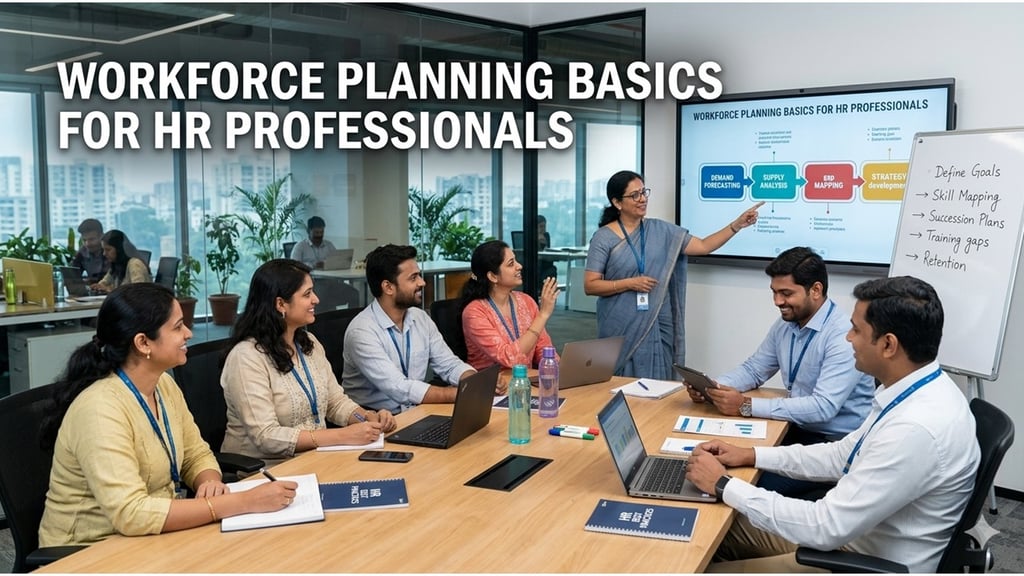
Workforce planning forms the foundation of effective HR management. For HR professionals, understanding the basic concepts and approach is essential to ensure that the organisation has the right number of employees, with the right skills, at the right time.
This article explains the basics of workforce planning, key steps, and practical considerations for HR teams in Indian organisations.
What Is Workforce Planning?
Workforce planning is a structured process to assess current and future workforce requirements and align them with organisational goals. It enables HR professionals to anticipate gaps, prevent surpluses, and optimise workforce utilisation.
Core aspects include:
Analysing current workforce capabilities
Forecasting future manpower needs
Identifying gaps between supply and demand
Planning actions to bridge gaps
Why HR Professionals Need Workforce Planning
Align HR with Business Strategy
Workforce planning ensures HR activities support organisational priorities such as growth, efficiency, and innovation.
Anticipate Workforce Gaps
Proactive planning helps identify shortages or skill gaps before they impact operations.
Control Costs
Planned recruitment, training, and redeployment reduces unplanned hiring costs and inefficiencies.
Improve Employee Experience
Transparent planning for career progression and internal mobility increases engagement and retention.
Key Steps in Workforce Planning for HR Professionals
Step 1: Analyse Current Workforce
Assess the current headcount, skills, experience levels, and productivity of employees.
Step 2: Forecast Future Needs
Estimate future manpower requirements based on business plans, expansion, or operational changes.
Step 3: Identify Gaps
Compare current workforce supply with future demand to pinpoint shortages or surplus.
Step 4: Plan Actions
Develop plans for recruitment, training, redeployment, or internal mobility to address gaps.
Step 5: Monitor and Review
Continuously track workforce metrics and adjust plans as business conditions evolve.
Light Checklist: Workforce Planning Basics
☐ Current workforce profile reviewed
☐ Future manpower demand estimated
☐ Skills and role gaps identified
☐ Recruitment or internal mobility plans prepared
☐ Workforce plans reviewed regularly
Sample Table: Workforce Planning Overview
Common Challenges for HR Professionals
Limited data on current workforce skills or headcount
Reactive hiring instead of planned recruitment
Misalignment between business strategy and HR plans
Underestimating future skill needs
Addressing these challenges ensures workforce planning is effective and supports organisational goals.
Conclusion
Workforce planning is a key competency for HR professionals. By understanding current capabilities, forecasting future needs, identifying gaps, and planning proactive actions, HR can ensure that the organisation maintains the right workforce at the right time.
Effective workforce planning improves business alignment, cost management, and employee experience, making it a core HR responsibility.
Conclusion--
Effective labour law compliance depends on how well HR operations, payroll, and business processes work together. When compliance is embedded into everyday workflows, organisations reduce risk, improve accuracy, and build sustainable governance systems. HR teams that prioritise integration over isolation are better positioned to manage compliance confidently and consistently.
HireDesk India © 2026 | All Rights Reserved
"Thoughtful guidance for everyday HR"


Quick Links
Topics
Connect
_______________________________________________________________________________________________________________________________________________________________________________________
HireDesk is a free HR knowledge platform focused on practical, India-specific workplace guidance. We help HR professionals, managers, and learners navigate people practices with clarity, responsibility, and real-world relevance.