
Workforce Planning Challenges in SMEs
WORKFORCE PLANNING & MANPOWER
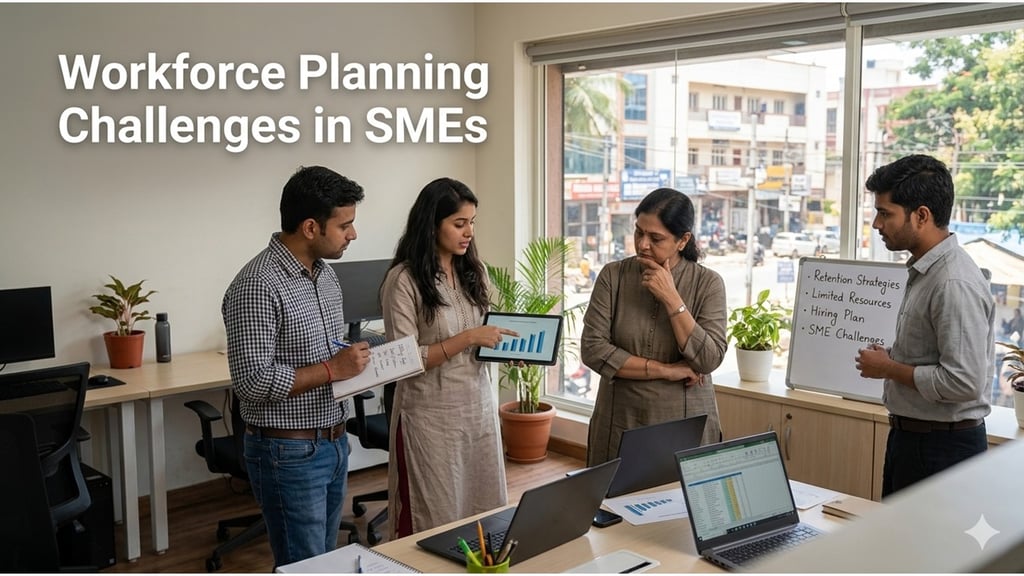
Small and medium enterprises (SMEs) play a vital role in the economy but often face distinct workforce planning challenges. Limited resources, rapid changes, and evolving business priorities make structured manpower planning difficult.
Understanding these challenges helps SMEs develop practical workforce plans that support growth while maintaining flexibility.
Why Workforce Planning Is Challenging for SMEs
Unlike large organisations, SMEs may not have dedicated HR teams or advanced workforce analytics. Workforce planning is often handled alongside daily operational responsibilities, which limits long-term focus.
Key constraints include:
Limited HR resources
Smaller workforce size
Budget sensitivity
Rapid changes in business demand
Common Workforce Planning Challenges in SMEs
Limited Workforce Data
SMEs may lack structured data on skills, productivity, or attrition, affecting planning accuracy.
Reactive Hiring
Hiring decisions are often made in response to immediate needs rather than planned demand.
Skill Gaps and Dependency Risks
A small workforce can result in overdependence on a few key individuals with critical skills.
Budget Constraints
Cost sensitivity limits hiring flexibility, training investments, and use of external consultants.
Balancing Flexibility and Stability
SMEs need agility while maintaining workforce continuity and employee engagement.
Practical Workforce Planning Approaches for SMEs
Focus on Critical Roles
Identify roles that are essential for business continuity and prioritise planning for them.
Use Simple Planning Tools
Basic spreadsheets and periodic reviews can support structured planning without complex systems.
Develop Multi-Skilled Employees
Cross-training improves flexibility and reduces dependency on single individuals.
Plan Hiring in Phases
Stagger recruitment to align with business growth and cash flow.
Review Workforce Plans Regularly
Frequent reviews help SMEs adapt quickly to changing business conditions.
Light Checklist: Workforce Planning for SMEs
☐ Critical roles identified
☐ Basic workforce and skill data maintained
☐ Hiring planned in line with business demand
☐ Employees cross-trained for flexibility
☐ Workforce plans reviewed periodically
Sample Table: Workforce Planning Challenges and Responses in SMEs
Conclusion
Workforce planning in SMEs requires practical, flexible, and focused approaches. By prioritising critical roles, maintaining basic workforce data, and planning hiring carefully, SMEs can manage manpower effectively despite resource constraints.
Structured workforce planning supports business stability, scalability, and resilience, even in resource-limited environments.
Conclusion--
Effective labour law compliance depends on how well HR operations, payroll, and business processes work together. When compliance is embedded into everyday workflows, organisations reduce risk, improve accuracy, and build sustainable governance systems. HR teams that prioritise integration over isolation are better positioned to manage compliance confidently and consistently.
HireDesk India © 2026 | All Rights Reserved
"Thoughtful guidance for everyday HR"


Quick Links
Topics
Connect
_______________________________________________________________________________________________________________________________________________________________________________________
HireDesk is a free HR knowledge platform focused on practical, India-specific workplace guidance. We help HR professionals, managers, and learners navigate people practices with clarity, responsibility, and real-world relevance.