
Workforce Planning: Definition, Purpose and Core Principles
WORKFORCE PLANNING & MANPOWER
Introduction
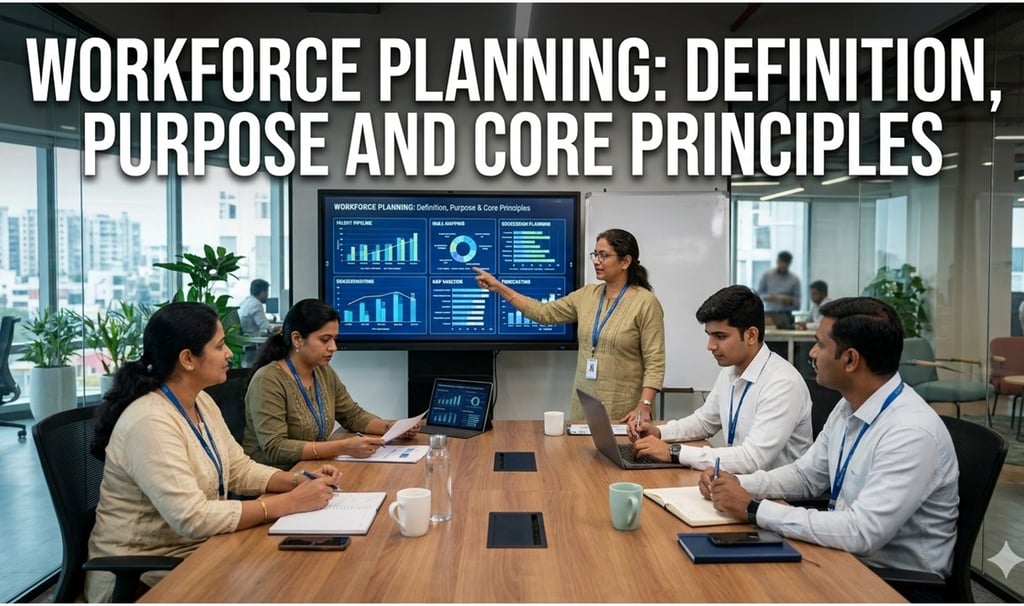
Workforce planning helps organisations ensure they have the right people, with the right skills, in the right roles, at the right time and cost. It is a structured approach to anticipating workforce needs and aligning manpower decisions with business goals.
Rather than reacting to staffing issues as they arise, workforce planning enables organisations to make informed, forward-looking people decisions that support operational continuity and long-term growth.
What Is Workforce Planning?
Workforce planning is a strategic process that analyses current workforce capacity and forecasts future manpower requirements. It helps organisations understand whether their existing workforce can support upcoming business plans or whether changes are required.
The process typically involves:
Reviewing current headcount and skill composition
Forecasting future workforce demand
Assessing internal talent availability
Identifying gaps and planning actions
Workforce planning connects business strategy with people strategy in a structured and measurable way.
Purpose of Workforce Planning
Align Workforce with Business Objectives
Workforce planning ensures manpower decisions are driven by business priorities such as expansion, operational efficiency, technology adoption, or restructuring.
Avoid Workforce Shortages and Surplus
By forecasting demand and supply in advance, organisations can reduce the risk of being understaffed or overstaffed.
Improve Cost and Resource Control
Planned workforce decisions help manage payroll costs, hiring budgets, and reliance on temporary resources.
Support Talent Development and Continuity
Clear workforce plans guide training, succession planning, and internal mobility initiatives.
Core Principles of Workforce Planning
1. Strategic and Forward-Looking
Workforce planning starts with business direction and looks ahead rather than focusing only on current needs.
2. Data-Based Decision Making
Reliable workforce data on headcount, skills, attrition, and productivity forms the basis of effective planning.
3. Cross-Functional Involvement
Inputs from business leaders, operations, finance, and HR ensure realistic and achievable workforce plans.
4. Continuous Review
Workforce plans should be reviewed periodically to reflect changes in business conditions or priorities.
5. Focus on Both Headcount and Skills
Effective workforce planning addresses not only the number of employees required but also the capabilities needed.
Light Checklist: Workforce Planning Essentials
☐ Clear business goals and timelines defined
☐ Accurate and updated headcount data
☐ Current workforce skills assessed
☐ Future manpower demand forecasted
☐ Gaps between demand and supply identified
☐ Action plans assigned with ownership
Sample Table: Key Components of Workforce Planning
Common Misunderstandings
Workforce planning is only about headcount budgeting
It is an annual exercise rather than an ongoing process
It is the responsibility of HR alone
Forecasts cannot be adjusted once finalised
Clarifying these points helps organisations use workforce planning more effectively.
Conclusion
Workforce planning provides a structured way to align people resources with business needs. By focusing on future requirements, data-driven insights, and continuous review, organisations can manage manpower proactively rather than reactively.
For organisations navigating growth, change, or cost pressures, workforce planning serves as a critical foundation for stability and long-term success.
Conclusion--
Effective labour law compliance depends on how well HR operations, payroll, and business processes work together. When compliance is embedded into everyday workflows, organisations reduce risk, improve accuracy, and build sustainable governance systems. HR teams that prioritise integration over isolation are better positioned to manage compliance confidently and consistently.
HireDesk India © 2026 | All Rights Reserved
"Thoughtful guidance for everyday HR"


Quick Links
Topics
Connect
_______________________________________________________________________________________________________________________________________________________________________________________
HireDesk is a free HR knowledge platform focused on practical, India-specific workplace guidance. We help HR professionals, managers, and learners navigate people practices with clarity, responsibility, and real-world relevance.