
Workforce Planning During Organisational Change
WORKFORCE PLANNING & MANPOWER
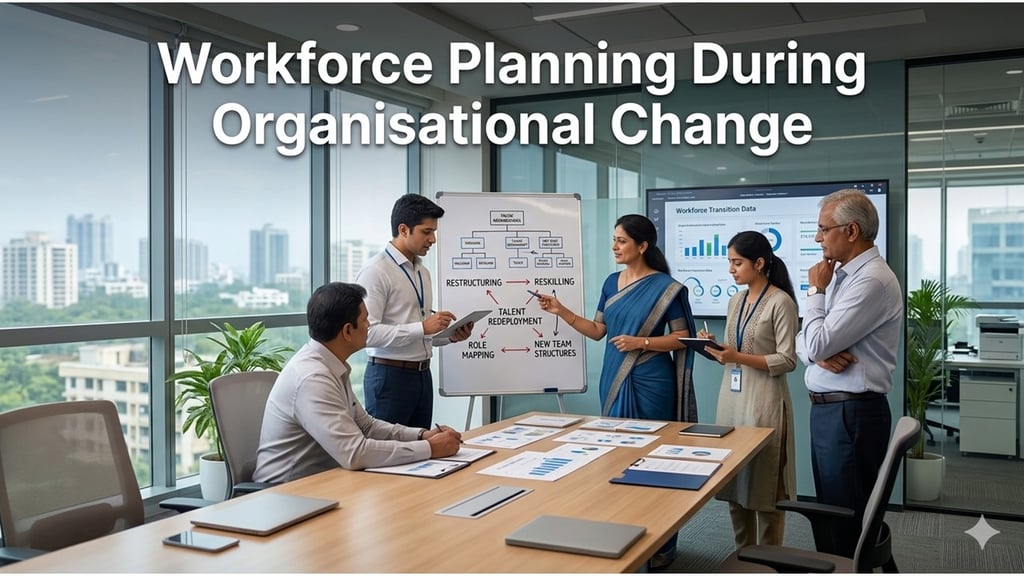
Organisational change often disrupts workforce stability. Mergers, restructuring, technology adoption, or business model shifts can quickly make existing manpower plans outdated.
Workforce planning during organisational change helps organisations maintain continuity while adjusting roles, skills, and capacity in a controlled manner.
Why Workforce Planning Is Critical During Change
Change initiatives frequently focus on structure, systems, or strategy, while workforce implications are addressed later. This increases the risk of skill mismatches, cost inefficiencies, and employee uncertainty.
Effective workforce planning helps to:
Align manpower with new operating models
Manage excess or shortage risks
Support smoother transitions
Maintain workforce confidence
Common Change Scenarios Affecting Workforce Plans
Organisational Restructuring
Changes in reporting lines or role consolidation require revised headcount and role planning.
Mergers and Acquisitions
Overlapping roles and differing skill sets need careful workforce assessment.
Technology and Process Changes
Automation or digitisation alters skill requirements and capacity needs.
Business Expansion or Contraction
Scaling up or down requires phased manpower adjustments.
Key Workforce Planning Actions During Change
Reassess Role Requirements
Review roles based on future-state needs rather than current structures.
Identify Surplus and Critical Skills
Map existing skills against future demand to identify gaps and excess capacity.
Sequence Workforce Decisions
Plan timing for redeployment, hiring freezes, or exits to minimise disruption.
Maintain Workforce Flexibility
Build buffers and internal movement options into revised plans.
Review Costs and Productivity
Evaluate workforce cost implications alongside operational changes.
Light Checklist: Workforce Planning During Change
☐ Change objectives and timelines understood
☐ Future-state roles and skills defined
☐ Surplus and critical skills identified
☐ Workforce actions sequenced and timed
☐ Revised plans reviewed regularly
Sample Table: Workforce Planning Focus During Organisational Change
HR’s Role in Workforce Planning During Change
HR supports organisational change by:
Translating business changes into manpower impacts
Providing realistic timelines for workforce actions
Coordinating communication and planning reviews
Ensuring workforce decisions remain compliant and consistent
Conclusion
Workforce planning during organisational change enables organisations to move from disruption to stability. By reassessing roles, sequencing workforce actions, and maintaining flexibility, HR and business leaders can manage transitions effectively while protecting productivity and morale.
Conclusion--
Effective labour law compliance depends on how well HR operations, payroll, and business processes work together. When compliance is embedded into everyday workflows, organisations reduce risk, improve accuracy, and build sustainable governance systems. HR teams that prioritise integration over isolation are better positioned to manage compliance confidently and consistently.
HireDesk India © 2026 | All Rights Reserved
"Thoughtful guidance for everyday HR"


Quick Links
Topics
Connect
_______________________________________________________________________________________________________________________________________________________________________________________
HireDesk is a free HR knowledge platform focused on practical, India-specific workplace guidance. We help HR professionals, managers, and learners navigate people practices with clarity, responsibility, and real-world relevance.