
Workforce Planning for Business Expansion
WORKFORCE PLANNING & MANPOWER
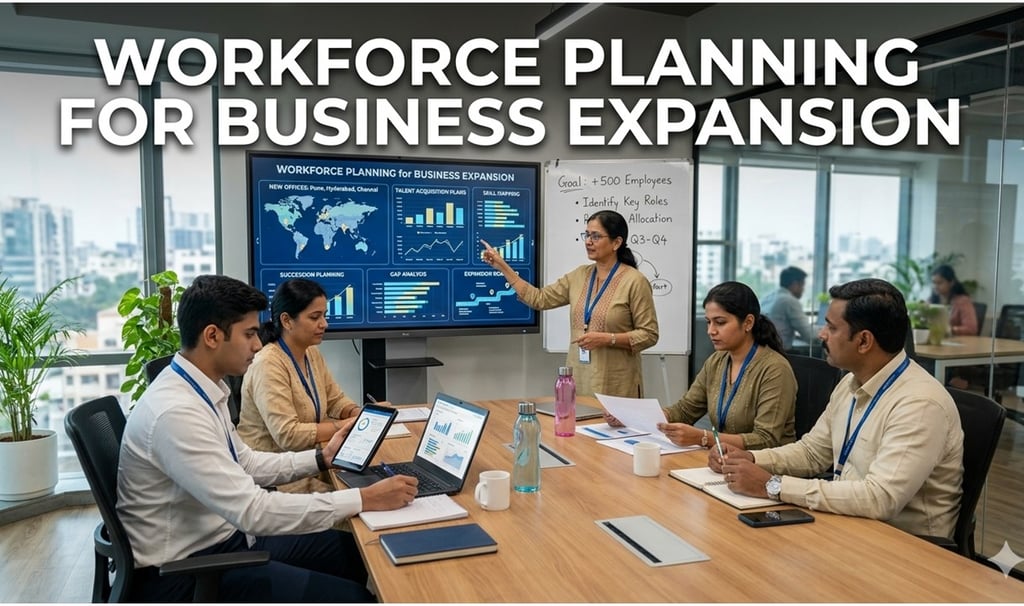
Business expansion brings growth opportunities, but it also places pressure on existing workforce capacity. Whether expansion involves new locations, increased production, additional service lines, or market entry, manpower requirements change quickly. Without structured workforce planning, expansion efforts may face delays, quality issues, or rising costs.
Workforce planning for business expansion helps organisations scale their manpower in a controlled and sustainable manner.
What Workforce Planning Means During Expansion
During expansion, workforce planning focuses on estimating additional manpower needs while ensuring existing operations continue smoothly. It involves forecasting future roles, skills, and headcount required to support growth initiatives.
This type of planning balances:
Immediate manpower requirements
Medium-term capability building
Long-term organisational structure
It ensures growth is supported by the right workforce at each stage.
Key Workforce Challenges During Expansion
Increased Demand for Skills
New projects or markets often require skills that may not exist internally.
Pressure on Existing Employees
Expansion can increase workloads, leading to burnout or attrition if not managed carefully.
Time Constraints
Expansion timelines may be aggressive, leaving little room for delayed hiring or training.
Cost Management
Rapid hiring without planning can significantly increase payroll and operational costs.
Recognising these challenges early helps workforce planning remain realistic and effective.
Steps to Plan Workforce for Business Expansion
Step 1: Understand Expansion Scope
Clearly define the scale, location, timeline, and nature of expansion activities.
Step 2: Forecast Manpower Demand
Estimate additional roles and headcount required across functions such as operations, sales, support, and leadership.
Step 3: Assess Internal Workforce Capacity
Identify employees who can be redeployed, promoted, or trained to support expansion needs.
Step 4: Decide the Workforce Mix
Determine the right balance of permanent employees, temporary staff, contractors, or outsourced roles.
Step 5: Phase Hiring and Development
Align manpower onboarding and training with expansion milestones rather than hiring everything upfront.
Role of Internal Mobility in Expansion
Internal mobility plays a key role during expansion by:
Filling leadership or supervisory roles quickly
Transferring experienced employees to new locations
Preserving organisational culture during growth
This reduces dependency on external hiring and supports faster stabilisation of new operations.
Light Checklist: Workforce Planning for Expansion
☐ Expansion objectives and timelines clearly defined
☐ Additional manpower requirements estimated by role
☐ Internal talent availability assessed
☐ Hiring and training plans phased
☐ Cost impact of expansion workforce reviewed
Example: Expansion Workforce Planning (Illustrative)
When opening a new facility or branch, organisations typically:
Transfer experienced managers from existing locations
Hire operational staff in phases based on demand
Provide early training before operations begin
Review manpower levels during the first few months of operation
This structured approach reduces operational risk during expansion.
Common Pitfalls
Overestimating manpower needs early in expansion
Ignoring internal talent movement opportunities
Delayed hiring leading to operational pressure
Lack of coordination between business and HR teams
Avoiding these pitfalls improves expansion outcomes and workforce stability.
Conclusion
Workforce planning for business expansion ensures growth is supported by the right people, skills, and structure. By forecasting needs, leveraging internal talent, and phasing workforce decisions, organisations can expand without compromising efficiency or employee experience.
A disciplined workforce planning approach turns expansion from a manpower risk into a managed organisational transition.
Conclusion--
Effective labour law compliance depends on how well HR operations, payroll, and business processes work together. When compliance is embedded into everyday workflows, organisations reduce risk, improve accuracy, and build sustainable governance systems. HR teams that prioritise integration over isolation are better positioned to manage compliance confidently and consistently.
HireDesk India © 2026 | All Rights Reserved
"Thoughtful guidance for everyday HR"


Quick Links
Topics
Connect
_______________________________________________________________________________________________________________________________________________________________________________________
HireDesk is a free HR knowledge platform focused on practical, India-specific workplace guidance. We help HR professionals, managers, and learners navigate people practices with clarity, responsibility, and real-world relevance.