
Workforce Planning for Cost Optimisation
WORKFORCE PLANNING & MANPOWER
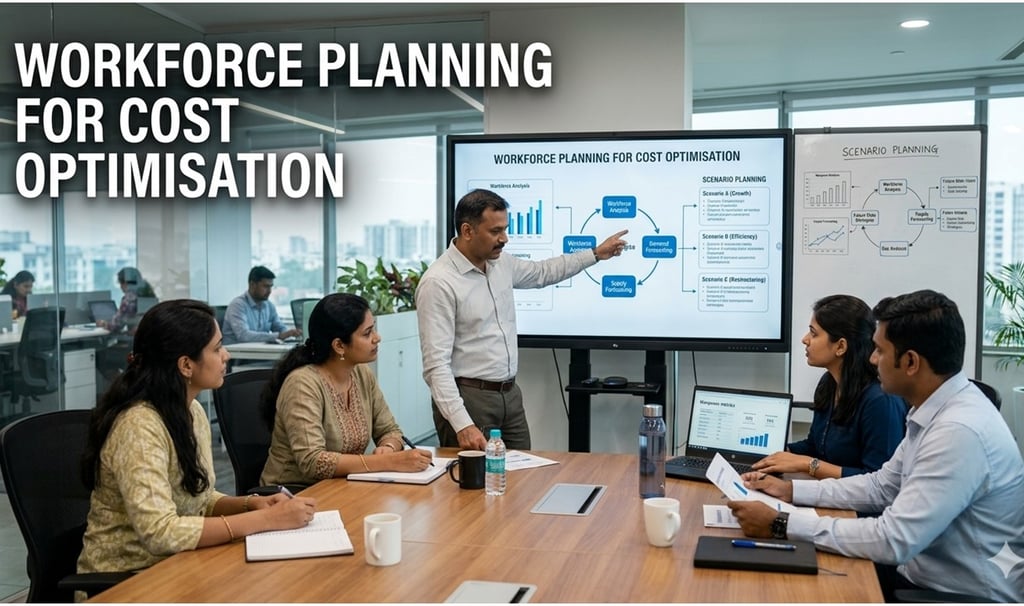
Manpower costs form a significant part of organisational expenses. Without structured workforce planning, cost decisions are often reactive—such as sudden hiring freezes, rushed layoffs, or uncontrolled overtime. Workforce planning for cost optimisation focuses on managing manpower expenses while maintaining productivity and service levels.
The objective is not cost cutting alone, but achieving the right balance between workforce efficiency and business needs.
Understanding Cost Optimisation in Workforce Planning
Cost optimisation in workforce planning involves analysing how manpower is deployed, utilised, and developed. It aims to ensure that workforce costs are aligned with output, demand, and long-term business priorities.
This approach considers:
Headcount and role distribution
Skill utilisation and productivity
Workforce mix and deployment models
It supports sustainable cost management rather than short-term reductions.
Key Workforce Cost Drivers
Headcount and Role Structure
Excess layers, overlapping roles, or inaccurate role design can increase costs without improving outcomes.
Attrition and Replacement Costs
High turnover leads to repeated hiring, training, and onboarding expenses.
Overtime and Temporary Staffing
Poor planning often results in excessive overtime or prolonged use of contract staff.
Skill Mismatch
Employees without the required skills may take longer to deliver, reducing productivity and increasing costs.
Workforce Planning Strategies for Cost Optimisation
Right-Sizing the Workforce
Align headcount with realistic demand forecasts to avoid both surplus and shortage.
Improving Skill Utilisation
Deploy employees based on capabilities rather than fixed roles to improve productivity.
Strengthening Internal Mobility
Internal transfers reduce external hiring costs and onboarding time.
Planned Upskilling
Developing internal skills lowers dependency on expensive external talent.
Optimising Workforce Mix
Balance permanent, contract, and outsourced resources based on business needs.
Integrating Cost Optimisation into Workforce Planning
Step 1: Analyse Current Workforce Costs
Review payroll, overtime, contractor spend, and training costs by function.
Step 2: Link Costs to Output
Assess whether manpower costs are aligned with productivity or service levels.
Step 3: Identify Inefficiencies
Highlight underutilisation, role duplication, or high-cost roles with limited impact.
Step 4: Plan Corrective Actions
Use redeployment, reskilling, role redesign, or phased hiring to address gaps.
Light Checklist: Workforce Cost Optimisation
☐ Workforce costs reviewed by role and function
☐ Headcount aligned with demand forecasts
☐ Overtime and contract usage monitored
☐ Internal mobility options explored
☐ Cost impact of workforce plans evaluated
Balancing Cost and Capability
Cost optimisation should not weaken organisational capability. Workforce planning must ensure that critical roles, future skills, and leadership pipelines remain protected while costs are managed.
A balanced approach helps organisations remain competitive without compromising long-term readiness.
Common Pitfalls
Focusing only on headcount reduction
Ignoring skill and capability requirements
Short-term cost decisions without future planning
Limited coordination between HR and finance
Avoiding these pitfalls ensures cost optimisation efforts support business stability.
Conclusion
Workforce planning for cost optimisation enables organisations to manage manpower expenses in a structured and sustainable way. By aligning headcount, skills, and workforce mix with business needs, organisations can control costs while maintaining performance.
When cost considerations are integrated into workforce planning rather than handled separately, manpower decisions become more balanced and resilient.
Conclusion--
Effective labour law compliance depends on how well HR operations, payroll, and business processes work together. When compliance is embedded into everyday workflows, organisations reduce risk, improve accuracy, and build sustainable governance systems. HR teams that prioritise integration over isolation are better positioned to manage compliance confidently and consistently.
HireDesk India © 2026 | All Rights Reserved
"Thoughtful guidance for everyday HR"


Quick Links
Topics
Connect
_______________________________________________________________________________________________________________________________________________________________________________________
HireDesk is a free HR knowledge platform focused on practical, India-specific workplace guidance. We help HR professionals, managers, and learners navigate people practices with clarity, responsibility, and real-world relevance.