Workforce Planning for Growing Organisations
WORKFORCE PLANNING & MANPOWER
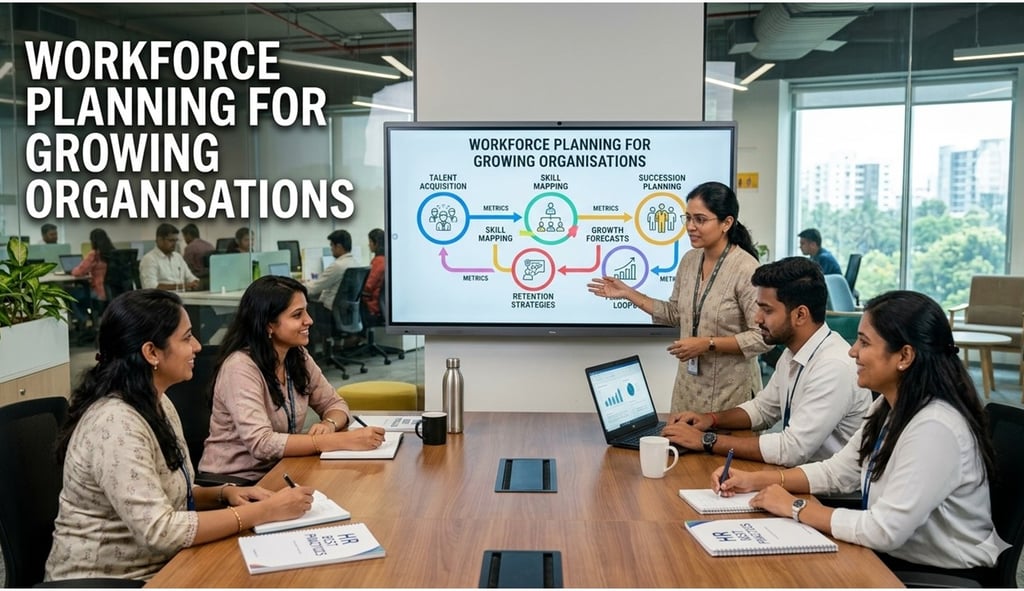
Organisations in a growth phase face unique workforce challenges. Rapid expansion, new markets, or additional services increase demand for talent, often in a short timeframe. Without structured workforce planning, growth can strain existing employees, create skill gaps, and escalate costs.
Workforce planning ensures that the organisation scales its manpower strategically and sustainably, aligning HR decisions with growth objectives.
Key Workforce Challenges During Organisational Growth
Rapid Increase in Demand
Expansion often requires more employees across multiple functions, locations, or projects.
Skills Shortages
New roles may require specialised skills that are not yet available internally.
Employee Burnout
Existing employees may face increased workloads during transition, risking engagement and productivity.
Maintaining Organisational Culture
As new talent joins rapidly, preserving company values and practices becomes challenging.
Workforce Planning Approach for Growing Organisations
Step 1: Understand Growth Objectives
Identify the scale, timeline, and functional areas affected by expansion.
Step 2: Forecast Manpower Needs
Estimate headcount, skills, and experience required for current and future growth initiatives.
Step 3: Assess Internal Workforce Capacity
Determine employees who can be redeployed, promoted, or trained to meet emerging demands.
Step 4: Plan Recruitment and Development
Combine external hiring, internal mobility, and upskilling programs to bridge gaps.
Step 5: Monitor and Adjust
Review workforce metrics regularly to ensure alignment with actual growth progress.
Light Checklist: Workforce Planning During Growth
☐ Growth objectives and timelines clearly defined
☐ Additional manpower and skills estimated
☐ Internal talent availability assessed
☐ Recruitment and training plans prepared
☐ Workforce plans reviewed periodically
Sample Table: Workforce Planning for Growth
Common Pitfalls
Overestimating internal capacity and underestimating external hiring needs
Ignoring timelines for training and onboarding
Failing to plan for skill gaps in emerging roles
Lack of coordination between HR and business leaders
Avoiding these pitfalls ensures workforce planning supports growth effectively.
Conclusion
Workforce planning is critical for growing organisations. By forecasting manpower needs, leveraging internal talent, and planning recruitment and training strategically, HR ensures that growth is sustainable, efficient, and aligned with business objectives.
Proactive workforce planning reduces risk, controls costs, and maintains organisational stability during periods of rapid change.
Conclusion--
Effective labour law compliance depends on how well HR operations, payroll, and business processes work together. When compliance is embedded into everyday workflows, organisations reduce risk, improve accuracy, and build sustainable governance systems. HR teams that prioritise integration over isolation are better positioned to manage compliance confidently and consistently.
HireDesk India © 2026 | All Rights Reserved
"Thoughtful guidance for everyday HR"


Quick Links
Topics
Connect
_______________________________________________________________________________________________________________________________________________________________________________________
HireDesk is a free HR knowledge platform focused on practical, India-specific workplace guidance. We help HR professionals, managers, and learners navigate people practices with clarity, responsibility, and real-world relevance.