
Workforce Planning for Technology and Automation Changes
WORKFORCE PLANNING & MANPOWER
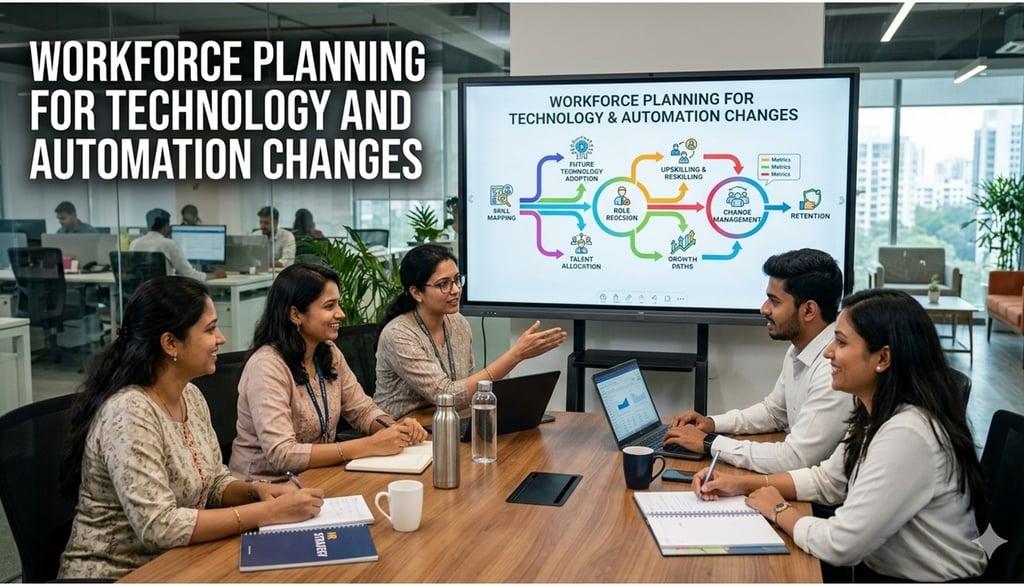
Technology adoption and automation are reshaping how work is performed across industries. While these changes can improve efficiency and productivity, they also alter manpower requirements and skill needs. Without structured workforce planning, technology-driven changes may lead to skill shortages, workforce surplus, or operational disruption.
Workforce planning for technology and automation ensures organisations manage these transitions smoothly and responsibly.
Impact of Technology and Automation on Manpower
Technology affects workforce planning in multiple ways. Some roles may reduce in volume, others may change in nature, and new roles may emerge. Automation does not always eliminate jobs, but it often shifts skill requirements.
Common impacts include:
Reduction in manual or repetitive roles
Increased demand for technical, analytical, or digital skills
Changes in job design and responsibility levels
Understanding these impacts early supports better manpower decisions.
Why Workforce Planning Is Critical During Automation
Anticipates Skill Shifts
Workforce planning helps identify which skills will become obsolete and which will be required in the future.
Prevents Sudden Workforce Disruption
Planned transitions reduce the risk of abrupt layoffs or unmanaged surplus.
Supports Business Continuity
Ensures critical operations continue while new systems are implemented.
Enables Responsible Change Management
Structured planning allows organisations to manage employee transitions with clarity and fairness.
Key Workforce Planning Actions for Technology Changes
Skill Mapping and Gap Analysis
Identify current skills and compare them with future role requirements after automation.
Role Redesign
Redefine roles to combine technology use with human decision-making or oversight.
Upskilling and Reskilling
Prepare employees for new or evolving roles through targeted training initiatives.
Workforce Restructuring
Plan redeployment, phased reduction, or role transitions where automation significantly reduces demand.
Integrating Automation into Workforce Planning
Step 1: Understand Technology Impact
Work with business and technology teams to assess how automation will affect roles and processes.
Step 2: Forecast Future Workforce Needs
Estimate changes in headcount, skill mix, and role distribution.
Step 3: Assess Internal Workforce Readiness
Identify employees who can be trained or redeployed into new roles.
Step 4: Plan Transition Timelines
Align workforce changes with technology implementation phases.
Light Checklist: Workforce Planning for Automation
☐ Technology impact on roles assessed
☐ Future skill requirements identified
☐ Reskilling and training plans defined
☐ Redeployment options evaluated
☐ Transition timelines aligned with implementation
Managing Employee Concerns During Automation
Clear communication is essential when technology affects roles. Workforce planning should include:
Transparent communication on role changes
Early identification of affected employees
Support through training or redeployment
Clear timelines and expectations
This approach helps maintain trust and engagement during change.
Common Challenges
Underestimating skill transition timelines
Limited training capacity
Resistance to change from employees or managers
Treating automation as only a technical project
Addressing these challenges ensures technology initiatives are supported by effective manpower planning.
Conclusion
Workforce planning for technology and automation helps organisations balance efficiency gains with workforce stability. By anticipating skill changes, preparing employees, and phasing transitions, organisations can adopt new technologies without disrupting operations.
As automation continues to evolve, integrating it into workforce planning is essential for long-term organisational readiness and resilience.
Conclusion--
Effective labour law compliance depends on how well HR operations, payroll, and business processes work together. When compliance is embedded into everyday workflows, organisations reduce risk, improve accuracy, and build sustainable governance systems. HR teams that prioritise integration over isolation are better positioned to manage compliance confidently and consistently.
HireDesk India © 2026 | All Rights Reserved
"Thoughtful guidance for everyday HR"


Quick Links
Topics
Connect
_______________________________________________________________________________________________________________________________________________________________________________________
HireDesk is a free HR knowledge platform focused on practical, India-specific workplace guidance. We help HR professionals, managers, and learners navigate people practices with clarity, responsibility, and real-world relevance.