
Workforce Planning Governance and Reviews
WORKFORCE PLANNING & MANPOWER
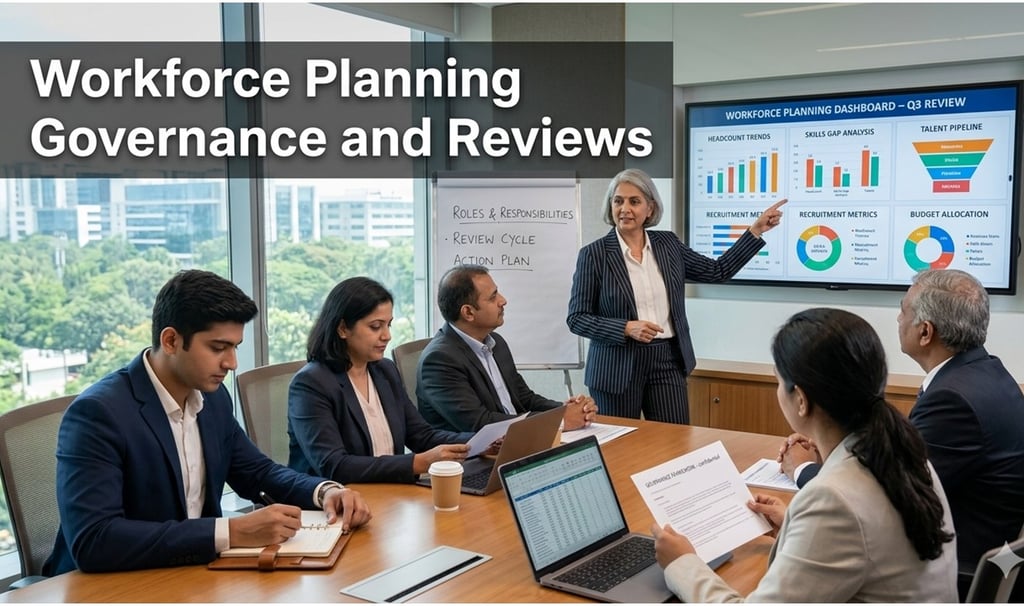
Workforce planning is most effective when it is structured, transparent, and regularly reviewed. Governance ensures accountability, consistency, and alignment with business objectives. Regular reviews allow organisations to adapt to changing conditions and correct deviations from the plan.
Without governance, workforce planning can become reactive, inconsistent, or disconnected from strategic goals.
Key Elements of Workforce Planning Governance
1. Roles and Responsibilities
Clearly define who owns the workforce planning process, including:
HR leadership
Business unit managers
Finance and operations teams
2. Policies and Procedures
Document standard processes for:
Workforce data collection
Demand and supply forecasting
Approvals for hiring or redeployment
3. Decision-Making Authority
Establish who can approve workforce changes, such as hiring, role changes, or contract engagement, to maintain control and accountability.
4. Compliance and Risk Management
Ensure workforce plans comply with internal policies, labour laws, and organisational ethics.
Importance of Regular Reviews
Monitor Progress
Track workforce plan execution against targets, including headcount, skills, and cost metrics.
Adjust to Change
Use review cycles to respond to business changes, attrition trends, or skill gaps.
Identify Gaps and Risks
Reviews highlight areas where the plan is not meeting organisational objectives.
Continuous Improvement
Feedback from reviews helps improve future workforce planning cycles.
Light Checklist: Governance and Reviews
☐ Roles and responsibilities clearly defined
☐ Workforce planning policies documented
☐ Decision-making authorities established
☐ Regular review schedule in place
☐ Gaps and risks tracked and addressed
Sample Table: Workforce Planning Governance Framework
Conclusion
Effective workforce planning requires strong governance and periodic reviews. Clearly defined roles, documented processes, decision authority, and regular monitoring ensure that workforce plans remain aligned with organisational strategy.
Governance and review processes create accountability, reduce risk, and improve the quality of workforce planning decisions.
Conclusion--
Effective labour law compliance depends on how well HR operations, payroll, and business processes work together. When compliance is embedded into everyday workflows, organisations reduce risk, improve accuracy, and build sustainable governance systems. HR teams that prioritise integration over isolation are better positioned to manage compliance confidently and consistently.
HireDesk India © 2026 | All Rights Reserved
"Thoughtful guidance for everyday HR"


Quick Links
Topics
Connect
_______________________________________________________________________________________________________________________________________________________________________________________
HireDesk is a free HR knowledge platform focused on practical, India-specific workplace guidance. We help HR professionals, managers, and learners navigate people practices with clarity, responsibility, and real-world relevance.