
Workforce Planning in Indian Organisations: Concepts, Approaches and the Role of HR
WORKFORCE PLANNING & MANPOWER
Introduction
Workforce planning and manpower management are essential to organisational stability, productivity, and long-term business growth. Organisations require not only the right number of employees, but also the right mix of skills, roles, and workforce structure to meet operational and business requirements effectively.
In Indian workplaces, workforce planning is often influenced by changing business priorities, cost pressures, attrition, hiring challenges, productivity expectations, expansion plans, and industry-specific operational realities. Without structured manpower planning, organisations may experience recurring issues such as understaffing, overstaffing, skill shortages, hiring delays, productivity gaps, and workforce instability.
Effective workforce planning is therefore not limited to headcount estimation alone. It involves understanding current workforce capabilities, anticipating future manpower needs, aligning hiring with business objectives, and ensuring workforce availability across functions and operations.
This article provides a practical overview of workforce planning and manpower management in the Indian context — covering manpower forecasting, workforce structuring, succession considerations, staffing challenges, operational workforce alignment, and the role of HR in building sustainable workforce systems.
The objective is not to create overly complex planning models, but to help organisations build practical, structured, and realistic workforce planning practices aligned with operational needs.
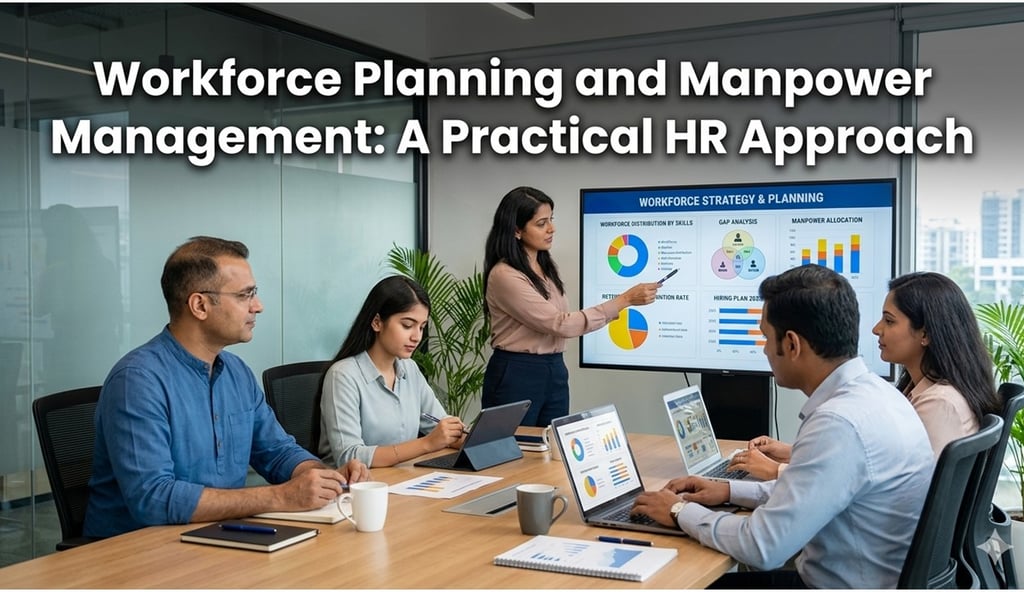
Understanding Workforce Planning and Manpower Management
Workforce planning refers to the process of assessing current and future workforce requirements in order to ensure that the organisation has the people, skills, and workforce capacity needed to achieve its operational and business objectives.
Manpower management focuses on the effective utilisation, deployment, monitoring, and continuity of the workforce across organisational functions and operations.
Together, these activities help organisations:
maintain operational continuity
improve workforce availability
reduce hiring gaps
control manpower costs
improve productivity
support business growth
strengthen workforce stability
Workforce planning becomes increasingly important as organisations expand, diversify operations, introduce new technologies, or experience changing workforce demands.
__________________________________________________________________________________________________
Why Workforce Planning Matters in Indian Organisations
Indian workplaces often operate in highly dynamic environments influenced by:
rapid business expansion
seasonal workforce fluctuations
attrition and retention challenges
labour availability differences across regions
industrial and operational dependencies
changing skill requirements
cost pressures
regulatory and compliance expectations
Without structured manpower planning, organisations may face:
frequent manpower shortages
delayed hiring
overdependence on emergency recruitment
excessive overtime
productivity disruptions
workforce imbalance across departments
higher recruitment and training costs
Practical workforce planning helps organisations move from reactive staffing decisions to more organised and sustainable workforce management.
__________________________________________________________________________________________________
The Workforce Planning Process
Workforce planning typically involves multiple connected stages.
1. Understanding Business Requirements
Workforce planning begins with understanding:
business objectives
operational priorities
production requirements
expansion plans
service delivery expectations
project timelines
organisational restructuring needs
HR planning should align with actual business and operational realities.
2. Assessing Current Workforce Strength
Organisations must evaluate:
existing manpower strength
department-wise staffing
skill availability
productivity levels
critical role dependencies
age and experience distribution
attrition patterns
absenteeism trends
This assessment helps identify workforce gaps and operational risks.
3. Forecasting Future Manpower Needs
Forecasting involves estimating future workforce requirements based on:
business growth
workload projections
technology adoption
production increases
new projects
branch or plant expansion
replacement hiring
retirement or succession considerations
Forecasting does not always require complex systems. Even structured operational estimation can significantly improve workforce readiness.
4. Identifying Workforce Gaps
Organisations may identify gaps related to:
manpower quantity
technical skills
leadership availability
shift coverage
supervisory strength
succession readiness
specialised workforce requirements
Identifying gaps early helps organisations reduce future hiring pressure and operational disruption.
5. Developing Workforce Strategies
Based on workforce gaps, organisations may adopt strategies such as:
planned recruitment
internal movement
training and upskilling
succession planning
contract staffing
shift restructuring
productivity improvement initiatives
automation support
workforce redistribution
Practical workforce planning combines hiring strategy with operational workforce management.
6. Monitoring and Reviewing Workforce Plans
Workforce planning should remain dynamic rather than static.
Organisations should periodically review:
hiring progress
attrition trends
productivity changes
workforce utilisation
absenteeism
overtime dependency
business expansion changes
skill availability
Regular review helps organisations adapt workforce plans to changing operational realities.
__________________________________________________________________________________________________
Workforce Planning Challenges in India
Many organisations face recurring manpower planning challenges such as:
reactive hiring practices
sudden attrition
shortage of skilled workforce
budget limitations
workforce mobility
location-specific hiring constraints
poor manpower forecasting
lack of workforce data
inconsistent departmental planning
dependency on contract labour
Factories and industrial establishments may additionally experience:
shift staffing instability
seasonal workforce fluctuations
absenteeism
labour contractor dependency
skill shortages in technical roles
Structured manpower planning helps reduce these recurring operational difficulties.
__________________________________________________________________________________________________
Workforce Planning in Factories and Industrial Environments
In manufacturing and industrial setups, workforce planning often requires additional operational focus due to:
production continuity requirements
shift-based operations
statutory compliance obligations
contractor workforce management
machine and process dependencies
safety-sensitive operations
Industrial workforce planning may therefore include:
shift manpower planning
contractor deployment assessment
skill matrix planning
backup manpower availability
multi-skill workforce development
overtime analysis
attendance and absenteeism monitoring
For industrial organisations, workforce planning directly influences productivity, safety, quality, and operational continuity.
__________________________________________________________________________________________________
The Role of HR in Workforce Planning
HR plays a critical role in connecting workforce requirements with organisational objectives.
Key HR responsibilities may include:
manpower forecasting
recruitment planning
workforce analytics
attrition monitoring
succession planning coordination
workforce budgeting support
organisational structuring
productivity analysis
policy alignment
employee retention initiatives
As organisations grow, workforce planning increasingly becomes a strategic HR responsibility rather than only an administrative activity.
__________________________________________________________________________________________________
Building Sustainable Workforce Systems
Sustainable workforce management requires more than short-term hiring.
Organisations benefit from:
planned recruitment systems
workforce forecasting
skill development initiatives
succession readiness
manpower data tracking
structured shift planning
internal mobility systems
workforce productivity monitoring
retention-focused practices
Well-planned workforce systems improve organisational stability while reducing recurring staffing disruptions.
__________________________________________________________________________________________________
Workforce Planning Requires Practical and Continuous Attention
Workforce planning is not a one-time exercise. Workforce needs continuously evolve based on business conditions, workforce behaviour, operational demands, technology, and organisational growth.
In Indian workplaces, manpower management becomes more effective when it remains:
practical
structured
business-aligned
operationally realistic
regularly reviewed
responsive to workforce realities
Organisations that invest in organised workforce planning are generally better positioned to manage growth, reduce workforce disruptions, improve productivity, and build more stable workplaces over time.
__________________________________________________________________________________________________
Explore Workforce Planning & Manpower Management Topics
Workforce Forecasting
Manpower Estimation
Headcount Planning
Business Expansion Planning
Workforce Structure
Role Planning
Departmental Staffing
Shift Planning
Span of Control
Workforce Stability
Attrition Management
Succession Planning
Retention Support
Backup Workforce Planning
Industrial Workforce Planning
Contractor Workforce Management
Shift Operations
Productivity Planning
Attendance & Absenteeism Analysis
Strategic Workforce Support
Skill Development
Workforce Analytics
Internal Mobility
Long-Term Workforce Planning
The related articles within the Workforce Planning section further examine workforce forecasting, manpower estimation, staffing structures, shift planning, attrition management, succession considerations, industrial workforce challenges, and long-term workforce planning approaches in greater detail.
These supporting resources are designed to help organisations strengthen workforce readiness, improve manpower stability, and align HR planning more effectively with operational and business requirements.
__________________________________________________________________________________________________
Conclusion
Workforce planning and manpower management are essential for building stable, productive, and operationally effective organisations. Without structured planning, organisations may struggle with recurring manpower shortages, productivity gaps, reactive hiring, workforce instability, and increased operational pressure.
In Indian workplaces, workforce planning must balance business growth, operational realities, workforce availability, cost management, and long-term organisational needs. Effective manpower management therefore requires continuous assessment, coordination, and practical decision-making rather than isolated staffing actions.
There is no single workforce planning model suitable for every organisation or industry. However, organisations generally achieve better workforce outcomes when manpower planning remains:
practical
organised
data-informed
operationally aligned
regularly reviewed
responsive to changing workforce conditions
As organisations continue to evolve, workforce planning should increasingly be viewed not merely as a staffing activity, but as an important part of organisational stability, productivity, and sustainable business growth.
Related Articles
HireDesk India © 2026 | All Rights Reserved
"Thoughtful guidance for everyday HR"


Quick Links
Topics
Connect
_______________________________________________________________________________________________________________________________________________________________________________________
HireDesk is a free HR knowledge platform focused on practical, India-specific workplace guidance. We help HR professionals, managers, and learners navigate people practices with clarity, responsibility, and real-world relevance.