
Workforce Planning in Project-Based Environments
WORKFORCE PLANNING & MANPOWER
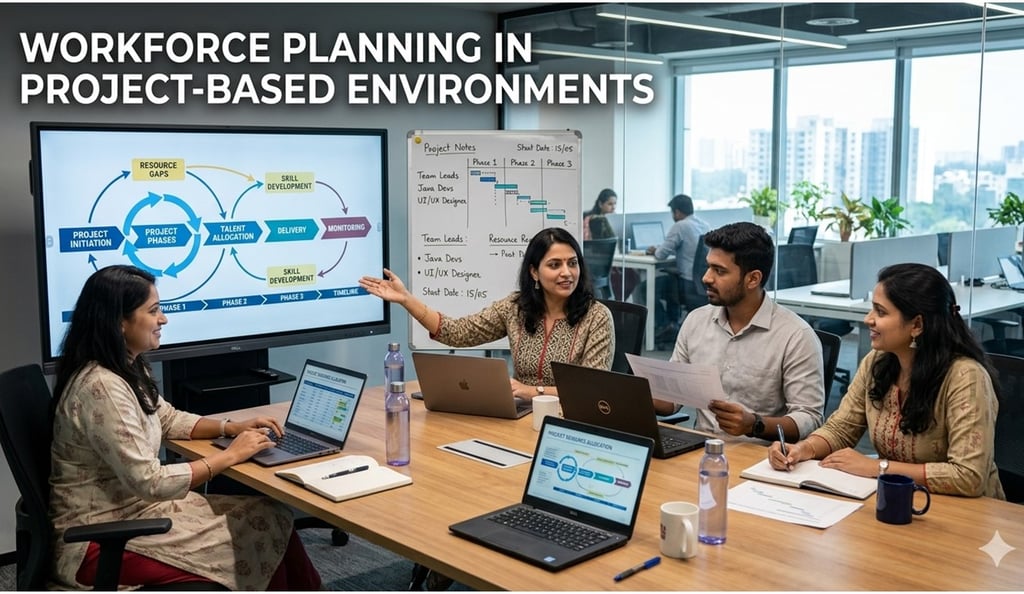
Project-based organisations face unique workforce challenges. Projects often have fixed timelines, variable workloads, and specialised skill requirements, which make workforce planning more complex than in stable operational environments.
Effective workforce planning ensures that the right talent is available when needed, without creating excess capacity or skill gaps.
Key Considerations for Project-Based Workforce Planning
1. Project Demand Forecasting
Identify the number of employees, skills, and experience levels required for each project. Consider:
Project timelines and milestones
Skill intensity and complexity
Peak and off-peak workload periods
2. Resource Allocation
Allocate employees based on skill fit, availability, and capacity. Internal mobility is critical to move resources between projects efficiently.
3. Skills and Competency Mapping
Map the skills required for each project and match them with existing employee capabilities. This ensures that specialised skills are available and gaps are addressed through training or hiring.
4. Temporary or Contract Staffing
Projects may require short-term resources or external consultants. Planning should factor in recruitment timelines, onboarding, and project-specific contracts.
5. Monitoring and Adjustment
Track resource utilisation, project progress, and skill adequacy throughout the project lifecycle. Adjust allocations or hire additional resources if required.
Light Checklist: Workforce Planning for Projects
☐ Project timelines and resource needs reviewed
☐ Skills and competencies mapped against project requirements
☐ Internal mobility opportunities evaluated
☐ Temporary or contract staffing planned as needed
☐ Resource utilisation and gaps monitored during the project
Sample Table: Project-Based Workforce Planning
Common Challenges
Difficulty forecasting resource needs for variable project timelines
Limited internal talent with specialised skills
Overlapping project demands causing overutilisation
Delayed recruitment or onboarding for temporary resources
Proactive planning, continuous monitoring, and flexible workforce allocation mitigate these risks.
Conclusion
Workforce planning in project-based environments requires agility, skill alignment, and proactive resource management. HR plays a critical role in forecasting project needs, mapping skills, allocating resources, and monitoring utilisation.
When executed effectively, project-based workforce planning ensures timely project delivery, optimal resource use, and minimal skill gaps.
Conclusion--
Effective labour law compliance depends on how well HR operations, payroll, and business processes work together. When compliance is embedded into everyday workflows, organisations reduce risk, improve accuracy, and build sustainable governance systems. HR teams that prioritise integration over isolation are better positioned to manage compliance confidently and consistently.
HireDesk India © 2026 | All Rights Reserved
"Thoughtful guidance for everyday HR"


Quick Links
Topics
Connect
_______________________________________________________________________________________________________________________________________________________________________________________
HireDesk is a free HR knowledge platform focused on practical, India-specific workplace guidance. We help HR professionals, managers, and learners navigate people practices with clarity, responsibility, and real-world relevance.