
Workplace Discipline and Code of Conduct in Factories: HR Enforcement Guide
INDUSTRIAL RELATIONS & FACTORY HR

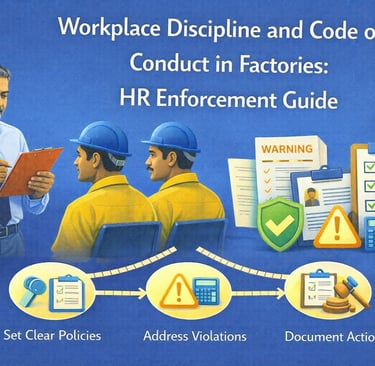
Workplace discipline is the backbone of smooth factory operations. In manufacturing environments, even minor indiscipline—late reporting, safety violations, insubordination—can impact productivity, safety, and industrial harmony.
For Factory HR teams, enforcing discipline is not about punishment. It is about setting clear behavioural expectations, ensuring fairness, and maintaining order while staying compliant with Indian labour laws.
This guide explains how HR should design, communicate, and enforce discipline and code of conduct in factories.
Why Discipline Is Critical in Factory Settings
Factories differ from offices due to:
Safety-sensitive operations
Shift-based working
Interdependence of roles
Unionised workforce
Without discipline, risks include accidents, disputes, and breakdown of supervisory authority.
Legal Basis for Discipline in Factories
Disciplinary control flows from:
Certified Standing Orders
Model Standing Orders (if not certified)
Appointment letters and service rules
Industrial Disputes Act / IR Code
Standing Orders clearly define:
Acts of misconduct
Punishments
Disciplinary procedures
HR must ensure discipline actions align strictly with these provisions.
Code of Conduct: What It Should Cover
A factory code of conduct should typically include:
Attendance and punctuality
Safety and PPE compliance
Behaviour with supervisors and co-workers
Prohibition of violence, abuse, and misconduct
Protection of company property
Alcohol, drugs, and prohibited substances
Clarity prevents disputes later.
Progressive Discipline Approach
Best practice factories follow progressive discipline, such as:
Counselling
Verbal warning
Written warning
Suspension
Domestic enquiry
Punishment
Jumping straight to harsh action often invites legal challenges.
HR’s Role in Enforcing Discipline
Factory HR must:
Educate workers on rules
Train supervisors on fair handling
Ensure documentation
Prevent victimisation or bias
Act as neutral facilitators
HR credibility depends on consistency.
Discipline vs Victimisation
Courts closely examine whether discipline is:
Genuine misconduct-based
Applied uniformly
Free from union bias
Actions taken against union leaders or active workers need extra caution and documentation.
Common Discipline-Related Disputes
HR often faces disputes related to:
Absenteeism
Refusal of work
Safety violations
Misbehaviour with supervisors
Group indiscipline
Early intervention helps prevent escalation.
Conclusion
Workplace discipline in factories must be rule-based, transparent, and humane. HR’s responsibility is to enforce discipline without damaging trust or triggering disputes.
Factories with clear codes and fair enforcement enjoy higher stability and lower litigation risk.
🗹 Factory HR Checklist: Discipline & Conduct
🗹 Certified Standing Orders in place
🗹 Code of conduct communicated clearly
🗹 Supervisors trained on discipline handling
🗹 Progressive discipline followed
🗹 Proper documentation maintained
🗹 Union neutrality ensured
🗹 Natural justice principles followed
🗹 Records preserved for disputes
Workplace Discipline – HR Reference Table
Conclusion--
Effective labour law compliance depends on how well HR operations, payroll, and business processes work together. When compliance is embedded into everyday workflows, organisations reduce risk, improve accuracy, and build sustainable governance systems. HR teams that prioritise integration over isolation are better positioned to manage compliance confidently and consistently.
HireDesk India © 2026 | All Rights Reserved
"Thoughtful guidance for everyday HR"


Quick Links
Topics
Connect
_______________________________________________________________________________________________________________________________________________________________________________________
HireDesk is a free HR knowledge platform focused on practical, India-specific workplace guidance. We help HR professionals, managers, and learners navigate people practices with clarity, responsibility, and real-world relevance.